How to Deodorize Artificial Turf and Get Rid of Dog Urine Smell
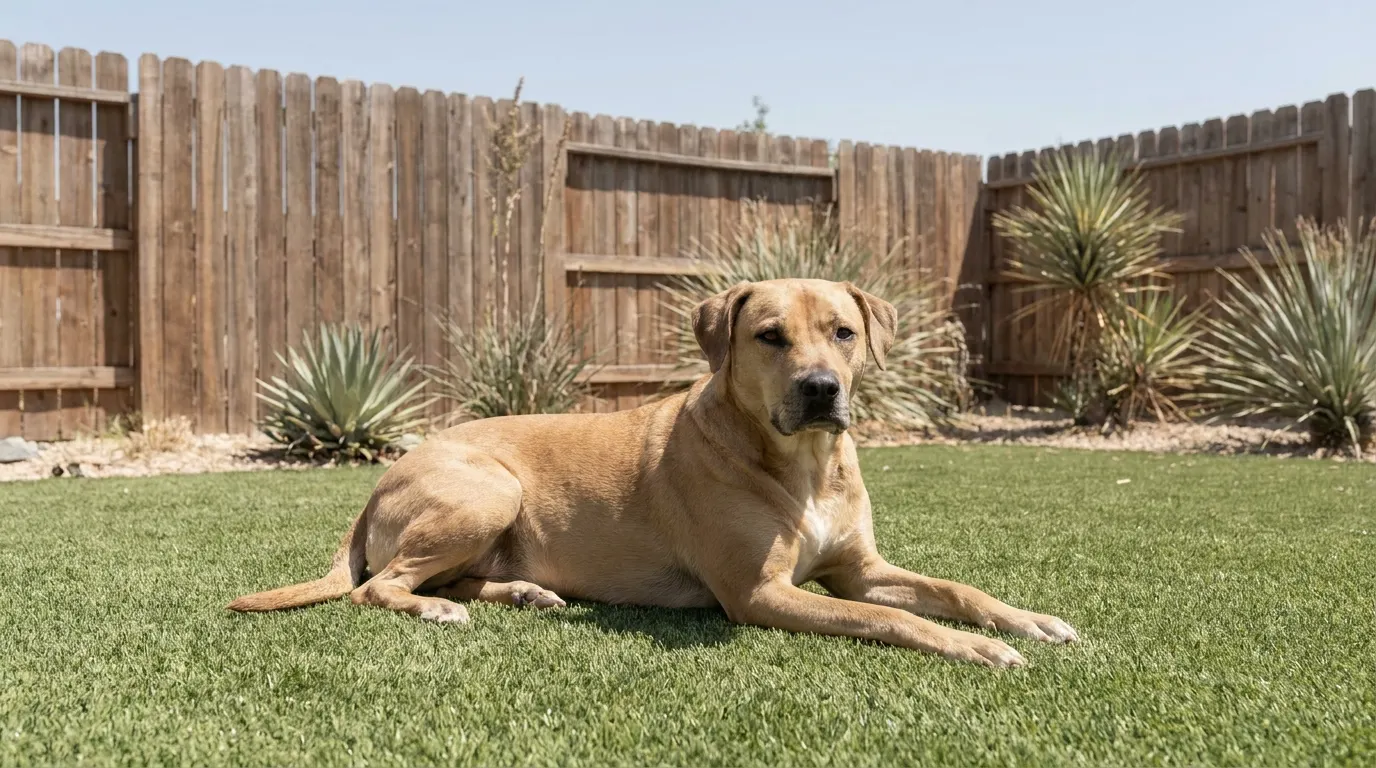
The smell is not in the grass. It is in the infill and the base underneath it, which is why a hose rinse reads as a fix until the next hot afternoon.
Want it handled instead? See what artificial turf cleaning covers.
Start here
What to try first on artificial turf dog urine smell
- Pick up solid waste every day. Nothing else on this list works over the top of it.
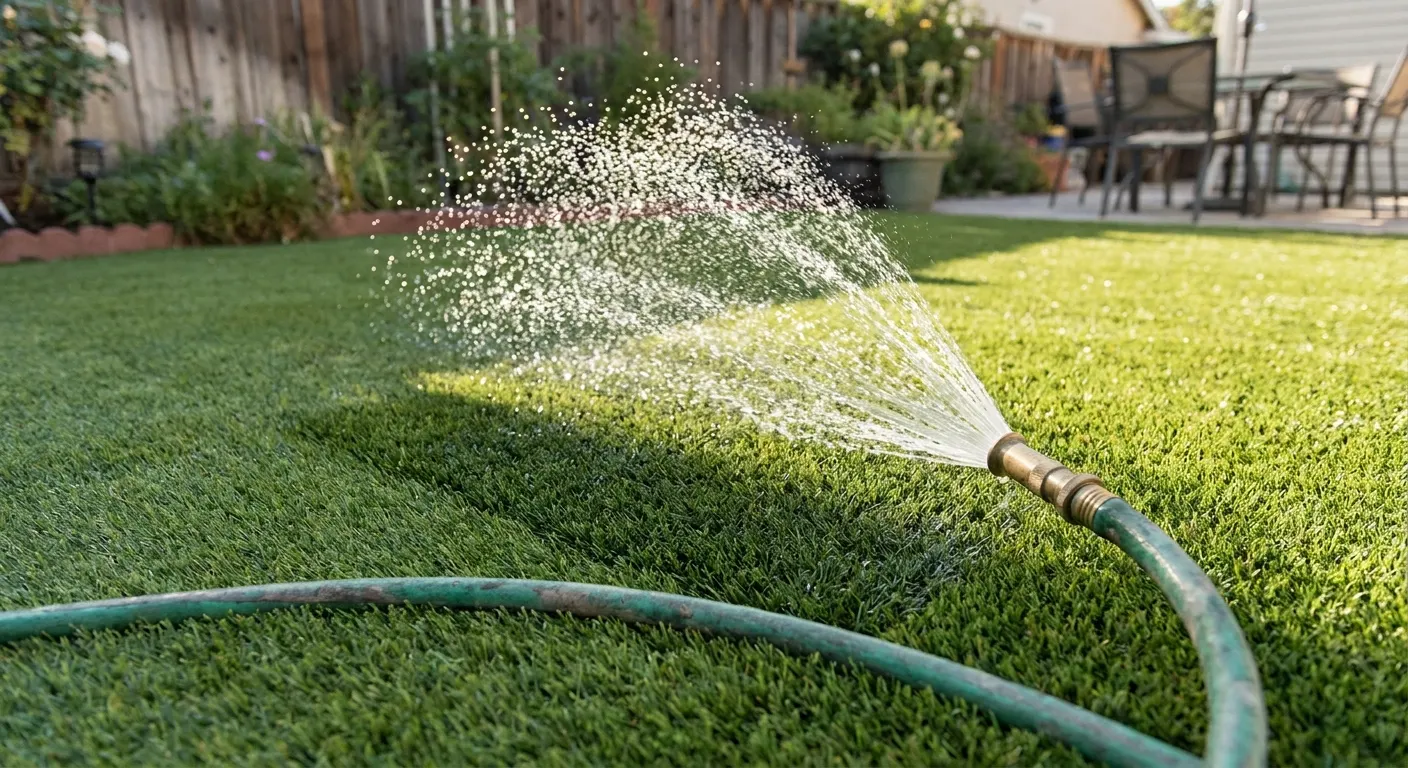
- Rinse the pet areas in the evening or in shade, not on a surface that has been baking all afternoon.
- Put an enzyme cleaner made for turf on the spots and keep them wet for the full dwell time on the label.
- Brush the product down into the pile with a synthetic-bristle broom so it reaches the infill instead of sitting on the blades.
- Expect to repeat it. Enzyme products work over hours to a few days and often need more than one application.
The full weekly round, including what turf makers say not to put on the surface, is in how to clean artificial turf.
The odor is not in the grass. It is in the infill and the base underneath it.
Where the dog urine smell in artificial turf actually sits
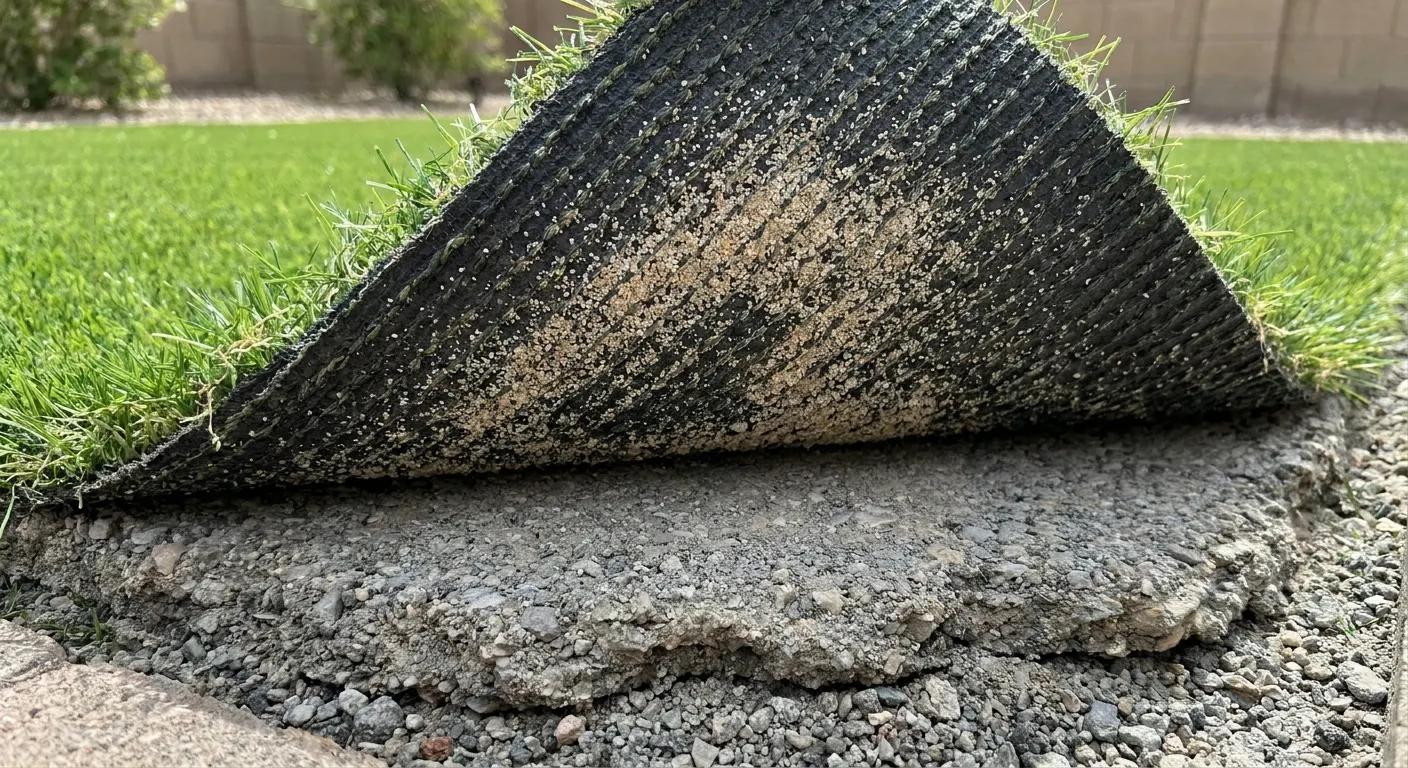
An artificial lawn is three things stacked up: the fibers you can see, the infill packed down around their bases, and the compacted base course below the backing. The blades are the part that gets rinsed and the part that almost never holds the smell.
The infill is where it collects. One infill maker puts it plainly: infill absorbs urine more than any other part of a turf system, and it is the part most open to bacterial growth from pet waste, especially where drainage is poor. Trade process guides describe the same thing from the cleaning side, as a porous matrix holding urine salts, organics and moisture against the granules and the backing.
Plain silica sand, the low-cost default that most installers reach for, has its own complication. An operator who works on these daily notes that silica sand has been associated with moisture retention, which can contribute to odor over time.
Why heat makes artificial turf smell worse
Two things happen on a hot day and they both work against you. The first is that dried urine residue re-releases with heat and humidity. The smell that arrives on a July afternoon is usually old residue waking up rather than anything the dog did that morning. Turf trade sources agree on this mechanism, though it is trade consensus rather than published science, and we will say so rather than dress it up.
The second is temperature itself. One trade source puts turf surfaces at roughly 140 to 170F on hot sunny days, about 35 to 55F above the natural grass beside them. That same heat flash-dries whatever you spray, often before the product has had its labeled dwell time, which quietly wastes the treatment. Work in shade or in the evening, and rinse the surface first to cool it, rather than spraying onto something that has been baking.
- Hour one
Fresh urine is roughly 95% water plus urea, and it is close to odorless. Nothing smells yet.
- Hours to days
Bacteria that produce urease break the urea down into ammonia and carbon dioxide, and push the local pH up toward 8 or 9. That is the sharp smell people describe.
- Days onward
Uric acid dries into residue bonded to the infill granules and the backing. It is not water soluble, so a rinse moves around it. Heat and humidity bring it back.
What an artificial turf deodorizer actually has to reach
A rinse dilutes and redistributes what is on the surface and leaves the urine salts behind, so the odor returns the moment the turf dries. Dried uric acid residue is not water soluble and it re-forms with humidity. That is the whole reason a hose feels like it works for a day.
Enzyme products are the usual answer for set-in pet odor because they break down uric acid and organic urine residue and can travel into the backing where the urine soaked in. The honest tradeoff, in the trade literature's own words, is that they are slow, moisture dependent and fussy about temperature, and may need repeat applications.
The usual reason one does nothing is under-application. The residue is in the infill and the backing, not on the fiber surface, so product that only wets the blades never gets where it needs to be. Brushing it down into the pile during or right after the dwell window is what carries it to the infill.
One practical warning: enzyme products are living cultures, and mixing them in the same tank with other cleaning chemistry kills the enzymes. If both are being used, they go on as separate passes. Follow the label on whatever you buy.
Odor-control infill, and the part nobody agrees on
Zeolite is the common odor-control infill. It is a mineral applied as a top-dress, often around a pound per square foot, and it works by cation exchange, binding ammonium and ammonia before they leave the surface.
What it needs after that is genuinely disputed. One infill maker, which sells a competing product, says zeolite depends on frequent rain to release what it has trapped and will not perform in dry conditions. Trade cleaning guidance says periodic rinsing helps maintain its capacity.
SYNLawn stays out of it and tells owners the useful thing instead: some odor-control infills need flushing with water and some do not, so ask which one is in your lawn. We are not going to pick a winner for you.
When cleaning will not fix artificial turf dog urine smell
Sometimes the answer is that the problem is underneath, and more product is just more product. Four situations where that is the case.
Water is sitting on top instead of draining through
If the backing or the base under the turf will not pass water, the surface stays damp and the contamination stays put. Turf makers and trade process guides both put drainage first in any inspection, because no cleaning routine holds up on a surface that cannot dry.
The infill has been saturated for years
The one escalation test we found in the trade literature: if several proper treatments over several weeks do not cut the odor by at least half, the infill is probably saturated and partial infill replacement is the real fix. Treat that as a working rule of thumb from an interested party, not a published standard. No manufacturer or trade body publishes a measurable threshold.
Somebody already top-dressed over the old infill
One infill maker is blunt about this one: adding odor-fighting infill on top of old, smelly infill does not fix matters. If the layer underneath is the problem, burying it deeper does not help.
Your turf brand controls what goes back in
ForeverLawn, for one, states that only its approved infill belongs in its products and that infill replacement should happen under the direction of an authorized dealer. Check your own brand before anyone pours anything into your lawn.
One more thing worth checking while anyone is working down at that level: we keep finding artificial turf laid straight over irrigation valve boxes. The good installers cut an access plug so the lid still lifts. If infill work is coming, that is the moment to find out which kind you have. More on that in artificial turf and your sprinkler system.
Still smelling dog urine on your artificial turf?
We are adding artificial turf cleaning for North Texas yards. Tell us how big the area is, how many dogs use it, and how long it has been going on, and we will tell you what the visit involves before anything is booked.
Artificial turf dog urine smell: common questions
Why does my artificial turf smell like dog urine?
Does artificial turf smell worse in hot weather?
Why does rinsing artificial turf not get rid of the smell?
What does an enzyme cleaner do on artificial turf?
Does zeolite infill stop artificial turf from smelling?
When is replacing the infill the only thing that will work?
Related artificial turf guides
- How to Clean Artificial TurfThe five-step weekly round, how often each part is due, and what turf makers say not to use.
- Artificial Turf and Your Sprinkler SystemValve box access plugs, what happens to the heads, and the checklist before turf goes down.
- Artificial Turf CleaningWhat the service covers and how to get a look at your yard.
Sources
- The Turf Cleaning Handbook, professional process and chemistry chapters: the urea to ammonia sequence and pH shift; uric acid residue bonded to infill and backing; infill as the porous matrix where urine salts accumulate; water dilutes and redistributes and leaves salts behind; under-application as the leading failure; enzyme strengths and limits; brooming product into the infill; surface temperatures of roughly 140 to 170F; heat defeating dwell time; the half-the-odor escalation test; drainage as the precondition. This is a trade publication produced by a working operator, not an independent standard.
- The Motz Group infill blog: microbes breaking urine into ammonia and carbon dioxide; infill absorbing urine more than any other part of the system; drainage and stagnation; zeolite needing rain to release trapped gases; top-dressing over old infill not fixing matters. Motz makes a competing coated infill, so weigh its zeolite criticism accordingly.
- SYNLawn Care and Maintenance Manual (doc SCM.v230517), p.4: enzyme neutralizers for pet odor, and that some odor-control infills require flushing with water while others do not, so ask the dealer.
- K9Grass by ForeverLawn Maintenance Guidelines (M0085 Rev. 02/25, k9grass.com): leave the bacterial enzyme on longer for best results; only approved infill in its products, with replacement under an authorized dealer.
- A working turf cleaning operator's published FAQ, on silica sand being associated with moisture retention that can contribute to odor over time, and on enzymes and other cleaning chemistry having to run as separate passes rather than a tank mix.
Last updated: