Large-Lot Sprinkler Repair in Lucas, TX
Proudly serving the Lucas community — 8,000+ residents across 13 square miles
Collin County records show 83 percent of Lucas homes with a recorded lot size sit on an acre or more, and the median is about 1.5 acres. Bigger lots mean more zones, longer pipe runs and more wiring, and many Lucas lots run irrigation off a private well. We repair large-lot residential irrigation at a flat rate with a 3-year warranty on parts and labor, under TCEQ Licensed Irrigator LI0023963.
Lucas Neighborhoods Where We Do Sprinkler Repair
Home counts, build years and lot sizes below come from Collin Central Appraisal District records. Build year tells you how old the controller and valves are likely to be.
Seis Lagos
Lucas's largest subdivision at about 410 homes, built from 1971 to the present with a median build year of 1998. System age varies widely from one section to the next.
Inspiration
About 250 homes built from 2022 on, the newest large neighborhood in Lucas. Calls here are more likely to be coverage, programming or damage than age-related wear.
Brockdale Estates
About 220 homes built from about 2010 to 2022, median build year 2018. Systems are mostly under 15 years old.
Stinson Highlands
About 160 homes with a median build year of 2017 and a median lot of about an acre. We have completed service visits in Stinson Highlands.
Huntwick and Forest Creek Estates
About 80 and 55 homes, built around 2000, both on lots of about two acres. Original controllers and valves here are 25 years old, past the typical 10 to 15 year controller life.
Belmont Park and Kings Crossing
Small subdivisions of about 20 and 30 homes on lots of one to two acres, built 2013 to 2015 (Belmont Park) and 2024 on (Kings Crossing). We have completed service visits in both.
Lucas Country Estates
A small older subdivision, median build year 1982, with lots around two acres. We have completed service visits here.
Claremont Springs and Saddlebrook Estates
About 90 and 70 homes, built in the early to mid 2000s (median build years 2008 and 2004). These systems are in the 20-year range.
GEOGRAPHIC AUTHORITY
What Breaks on Large Lucas Lots
Acreage irrigation is the same hardware as a subdivision system, spread over more ground. That changes where it fails.
Sprinkler Repair Services for Lucas Homes
Large-Lot Sprinkler Repair
Troubleshooting a system with many zones takes a systematic, zone-by-zone approach, including systems fed by a private well (we repair the sprinkler side, not the well or pump). We trace pressure drops, find leaks and replace broken heads, flat rate and quoted before work begins.
- Zone-by-zone pressure diagnostics
- Broken head and leak repair
- Dripline leak repair
- 3-year warranty on parts and labor
Watering Mistakes in Lucas
These are the most common irrigation issues we encounter when servicing Lucas properties.
- Running one long cycle per zone on clay instead of cycle-and-soak
- Letting end-of-run zones run longer to compensate for low pressure
- Leaving a controller on a fixed schedule through the season changes
Local Water Regulations
Lucas follows NTMWD watering guidelines: twice-weekly watering, with no irrigation between 10 AM and 6 PM from April through October.
Smart Upgrades for Lucas Properties
On a large lot there are more zones to schedule, so upgrades that set schedules per zone matter more.
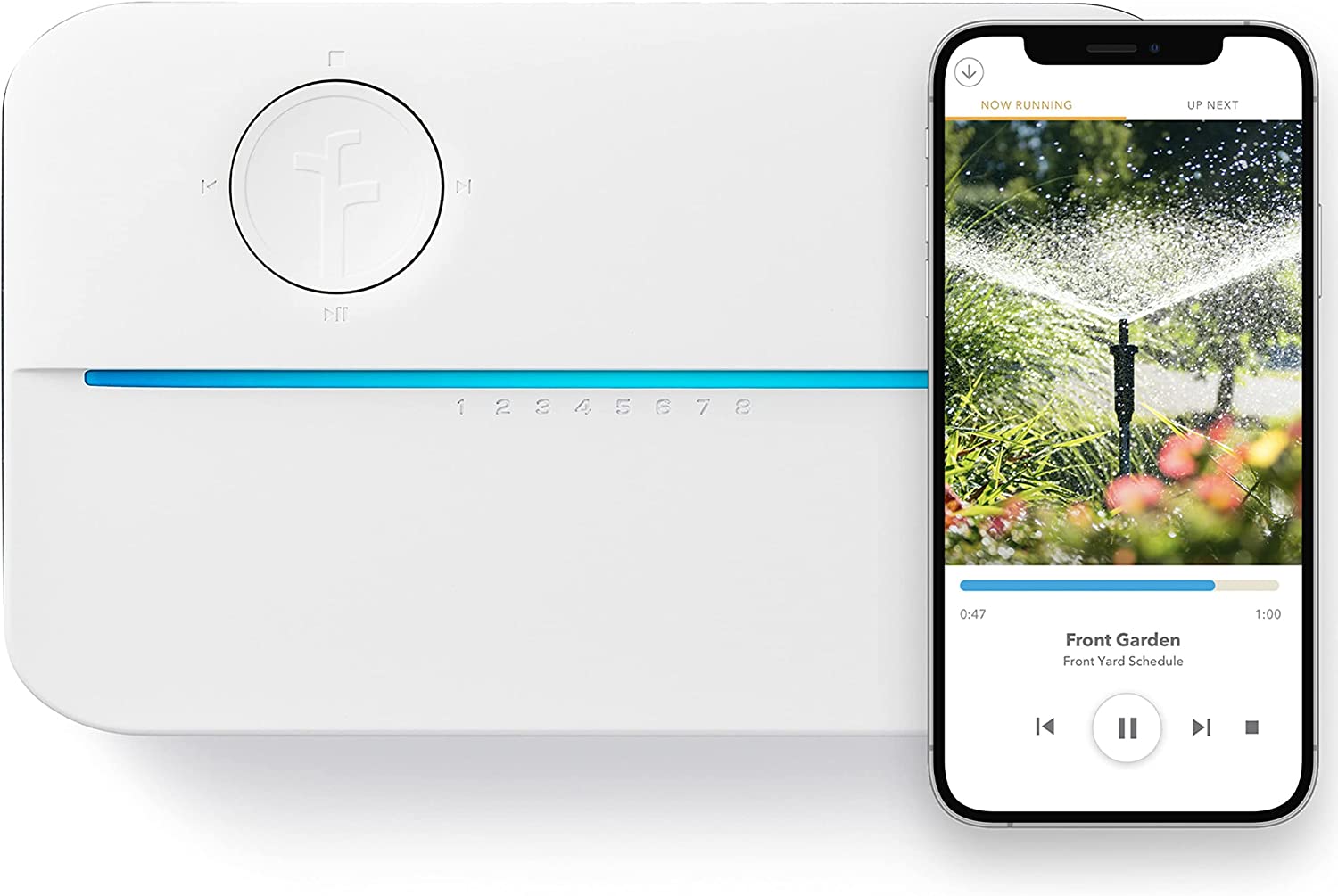
Rachio 3 Controller
Top RatedPer-zone settings and weather-based adjustments let each area of a large lot run the schedule it needs. Installed by a certified Rachio Pro installer.
Zone-by-zone scheduling
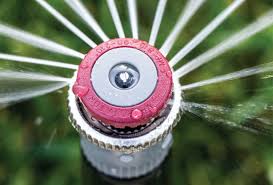
MP Rotator Nozzles
EfficiencyApply water at a rate closer to what clay can absorb, which reduces runoff. They thread onto existing spray bodies.
Ideal for clay soil
TESTIMONIALS
What Better Earth Customers Say on Google

Jessica Shellock
Brandon was very easy to work with and did a great job with replacing my sprinkler system panel. Would definitely recommend!

John Pedraza
Great knowledge, gave me pointers on using my system

dark horse
Prompt timing and diagnosis. Explained in detail the extent of work needed and worked continuously until all five sprinkler control valves were replaced and tested for use.

Jerrod Kay
Brandon with Better Earth Solutions was great. He was easy to communicate with, on time, and professional. I reached out to him when we couldn’t get in touch with our previous provider. He did the proposed repair work on my old system on the same day and kept me updated on progress throughout. Will definitely use again and would 100% recommend to anyone who needs sprinkler repair or installation in or around Plano.
Jessica Shellock
Brandon was very easy to work with and did a great job with replacing my sprinkler system panel. Would definitely recommend!
John Pedraza
Great knowledge, gave me pointers on using my system
dark horse
Prompt timing and diagnosis. Explained in detail the extent of work needed and worked continuously until all five sprinkler control valves were replaced and tested for use.
Jerrod Kay
Brandon with Better Earth Solutions was great. He was easy to communicate with, on time, and professional. I reached out to him when we couldn’t get in touch with our previous provider. He did the proposed repair work on my old system on the same day and kept me updated on progress throughout. Will definitely use again and would 100% recommend to anyone who needs sprinkler repair or installation in or around Plano.
Jessica Shellock
Brandon was very easy to work with and did a great job with replacing my sprinkler system panel. Would definitely recommend!
John Pedraza
Great knowledge, gave me pointers on using my system
dark horse
Prompt timing and diagnosis. Explained in detail the extent of work needed and worked continuously until all five sprinkler control valves were replaced and tested for use.
Jerrod Kay
Brandon with Better Earth Solutions was great. He was easy to communicate with, on time, and professional. I reached out to him when we couldn’t get in touch with our previous provider. He did the proposed repair work on my old system on the same day and kept me updated on progress throughout. Will definitely use again and would 100% recommend to anyone who needs sprinkler repair or installation in or around Plano.
Why Choose Better Earth Solutions in Lucas
Licensed & Insured
Full coverage for your protection and peace of mind.
Certified Rachio Pro
Factory-trained smart controller installation and programming.
DFW Water Stewards
Every system we touch is designed for conservation. We protect your landscape and DFW's water supply.
FAQ.
Common questions from Lucas homeowners about large-lot sprinkler repair, pricing, warranty and booking.
Call Us Now
(469) 209-4110
We serve all of Lucas. Collin County appraisal records list the largest subdivisions as Seis Lagos (about 410 homes), Inspiration (about 250), Brockdale Estates (about 220), Stinson Highlands (about 160), Lakeview Downs (about 110), Enchanted Creek (about 90), Claremont Springs (about 90), Huntwick (about 80), Saddlebrook Estates (about 70) and Forest Creek Estates (about 55). We have completed service visits in Stinson Highlands, Belmont Park, Kings Crossing and Lucas Country Estates.
Yes. Many Lucas properties run irrigation off a private well, and we repair those sprinkler systems. We repair the sprinkler system downstream of the well: heads, valves, lines, controllers and drip. We do not repair wells, pumps, pressure tanks or pump-start wiring, and we do not do drinking-water work. If the symptoms point at the well itself, we will tell you so and you will need a well contractor for that part.
Collin County records show a median recorded lot size of about 1.5 acres, and 83 percent of Lucas homes with a recorded lot size sit on an acre or more. That means more zones, longer pipe runs and more wiring than a typical subdivision lot. A weak zone at the far end of a long run is often a leak or an overloaded zone rather than a supply problem, so we check pressure zone by zone before adding run time.
Every repair is quoted flat rate, so you know the price before work starts. Valve repair starts around $200, and valve replacement is one flat rate per valve regardless of brand or type. We diagnose first and quote the real problem, not a guess over the phone. The visit has its own service fee that covers the trip and is separate from the repair price.
Yes. Every repair carries a 3-year warranty on parts and labor. If the repair we did fails, we fix it at no charge. If the original repair is holding and something else has broken, that is new work, and we quote it before doing anything.
Yes. We hold TCEQ Licensed Irrigator LI0023963. The auditor credential is TxCLIA Certified Auditor through Texas A&M AgriLife, and we are a certified Rachio Pro installer and an EPA WaterSense Listed Pro. Better Earth Solutions is owner-operated, so the person who answers (469) 209-4110 is the person who shows up.
Book online at callbetterearth.com/book or call (469) 209-4110. The booking page shows the dates currently open and checks your ZIP. Repairs are authorized on site, so someone who can approve the work should be home or reachable. On a large lot, gate access matters too: if nobody can be there, gate access and a way to reach you must be arranged before the appointment. Emergency service is available.
Lucas follows NTMWD watering guidelines: twice-weekly watering, with no irrigation between 10 AM and 6 PM from April through October. On clay, cycle-and-soak programming, with short run times and breaks between cycles, keeps water from running off. A smart controller can hold that schedule across many zones without manual changes.
A fuse that keeps blowing means something downstream is drawing more current than it should: a shorted solenoid, a damaged wire in the field, or a failing controller. We isolate the cause zone by zone before replacing anything. On one Lucas property we replaced a controller after repeated blown fuses.
Yes. Large lots carry more dripline in beds, and each leak is a place water escapes before it reaches the plants. On one Lucas property we repaired nine dripline leaks. A drip zone that runs for its full cycle but leaves dry plants is the usual sign.
Clay accepts water far slower than a spray head applies it, and roughly a quarter inch of applied water per cycle is where spray output starts running off instead of soaking in. Cycle-and-soak programming and MP Rotator nozzles, which apply water at a rate closer to what clay can absorb, are the usual fixes.
Buried PVC does not freeze deep enough here to need compressed-air blowouts. What is exposed is above grade: the backflow assembly, above-ground piping and any valve sitting out of the ground. Insulate or box those before a hard freeze, and make sure the controller suspends watering through freezing weather.
Usually it is not the Rachio. Smart controllers keep running their stored schedules without WiFi, so an internet problem costs you weather skips and app control, not watering. When a zone is genuinely dead, it is far more often a valve, a solenoid, or the wiring.
Still have questions?
Our irrigation experts are ready to help you with any questions about sprinkler repair and maintenance.
Schedule ServiceSecure Your Investment
Better Earth Solutions delivers professional irrigation service you can trust.
Sprinkler & Irrigation Services in Lucas
Sprinkler Repair in Lucas
Fast, reliable repairs for broken sprinkler heads, leaks, and system malfunctions.
→Valve Repair & Replacement in Lucas
Expert repair and replacement of irrigation valves to restore proper water flow.
→Sprinkler Head Replacement in Lucas
Replace damaged or inefficient sprinkler heads with modern, water-saving models.
→Valve Locating in Lucas
Professional equipment to find buried irrigation valves hidden under grass, mulch, or concrete.
→Wiring & Electrical in Lucas
Diagnose and repair irrigation wiring issues, faulty solenoids, and controller problems.
→Sprinkler Inspection in Lucas
Comprehensive system inspections to identify issues before they become costly problems.
→Maintenance & Winterization in Lucas
Seasonal maintenance, spring startups, and winterization to protect your investment.
→Smart Controller Installation in Lucas
Rachio Pro Series installation. Save up to 40% on water with WiFi-enabled smart irrigation controllers.
→Rachio Repair & Troubleshooting in Lucas
Rachio not working? It is usually not the Rachio. Diagnostic-first service for controllers and the zones they run.
→Flow Meter Installation in Lucas
Irrigation flow meters with leak alerts and auto-shutoff. Solar wireless link when the meter and controller are separated by concrete.
→Foundation Watering Systems in Lucas
Drip-based foundation watering systems to protect DFW slabs from clay soil movement.
→Irrigation Audit in Lucas
EPA WaterSense certified irrigation audit — coverage, distribution uniformity, and water savings report.
→Backflow Preventer Repair in Lucas
Repair and replacement of failed, leaking, or freeze-damaged backflow preventers. Testing referred to licensed testers.
→Homeowner Resources
Not sure where to start? Our sprinkler repair cost guide explains what common repairs involve and what drives the price, the DFW seasonal watering schedule shows what your controller should be doing right now, and if a zone has gone quiet, the sprinkler not turning on guide walks the diagnosis step by step.
Nearby Service Areas
We also serve communities near Lucas. Click to learn about irrigation services in these areas.
Last updated: