

Sprinkler Repair in Rockwall, TX
Lakeside irrigation experts for Lake Ray Hubbard properties. Hard water, wind exposure, and sandstone geology demand an irrigator who knows the lake.
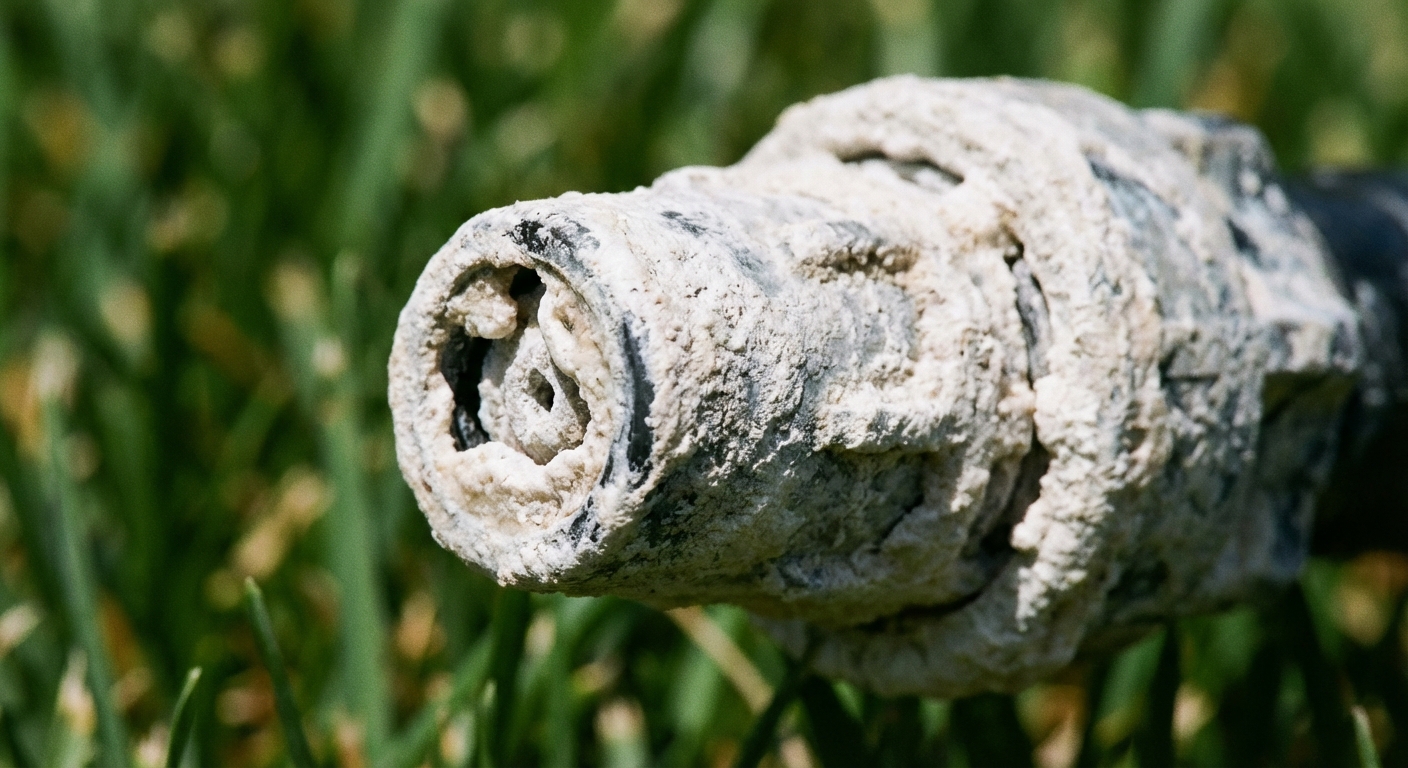
Hard Water Mineral Scaling
Lake Ray Hubbard water runs 140-180 PPM calcium and magnesium. Minerals scale nozzles and valve diaphragms over time, reducing flow rates and causing zone failures. A nozzle rated for 2 GPM can drop to 1.2 GPM within 6-8 months without maintenance. We clean and replace scaled components on a preventive schedule instead of waiting for failure.
- Nozzle flow drops 40% within months
- Valve diaphragms harden and crack
- Drip emitters clog silently — plants die before you notice
Lakefront Wind Exposure
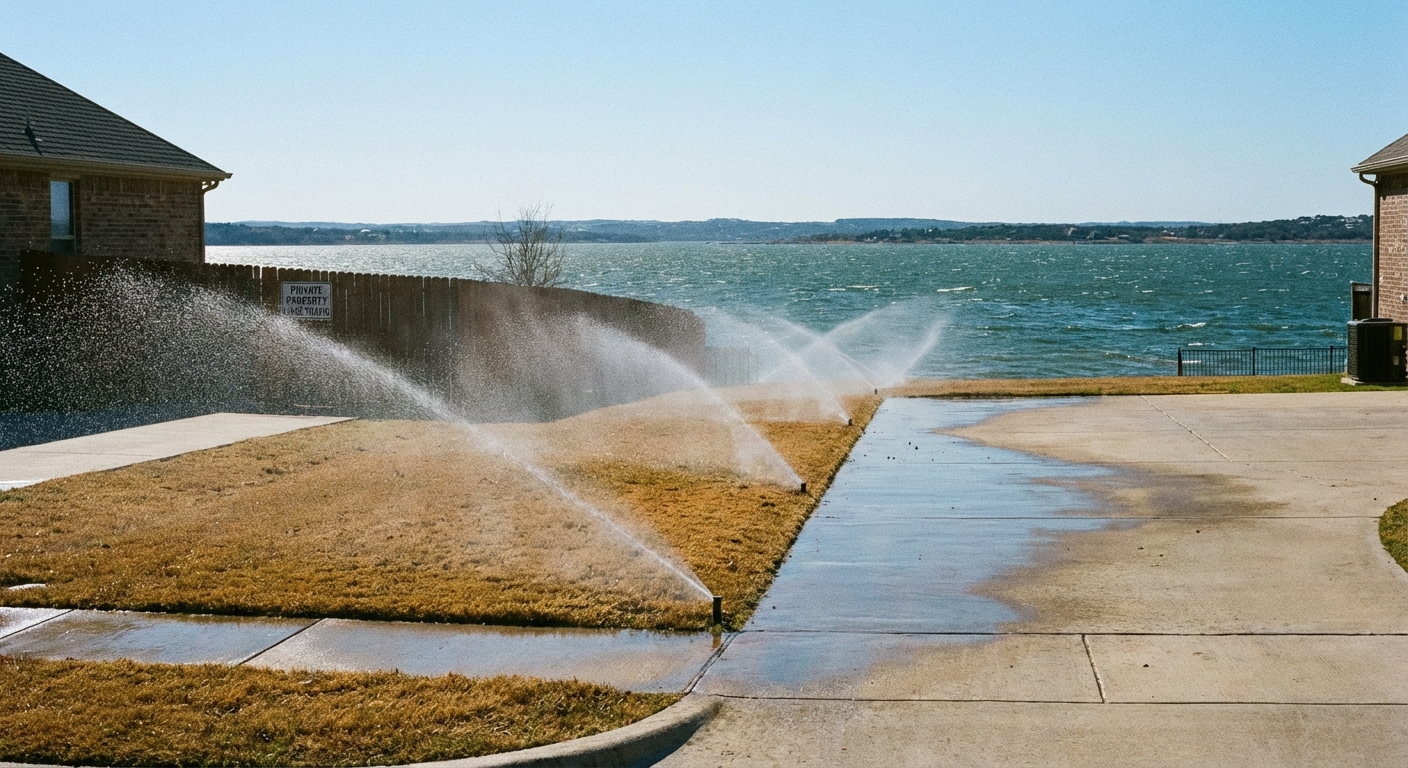
Properties along the Lake Ray Hubbard shoreline face consistent wind that throws spray patterns off target. Water lands on driveways and sidewalks instead of turf, wasting money and creating dry spots. Standard head spacing fails on exposed lots. We use low-angle wind-rated nozzles and adjust head spacing for each exposure zone.
- Spray drift onto hardscape wastes 30-50% of water
- Dry spots appear despite regular watering
- Wind-rated nozzles solve the problem permanently
Shallow Pipe Over Sandstone
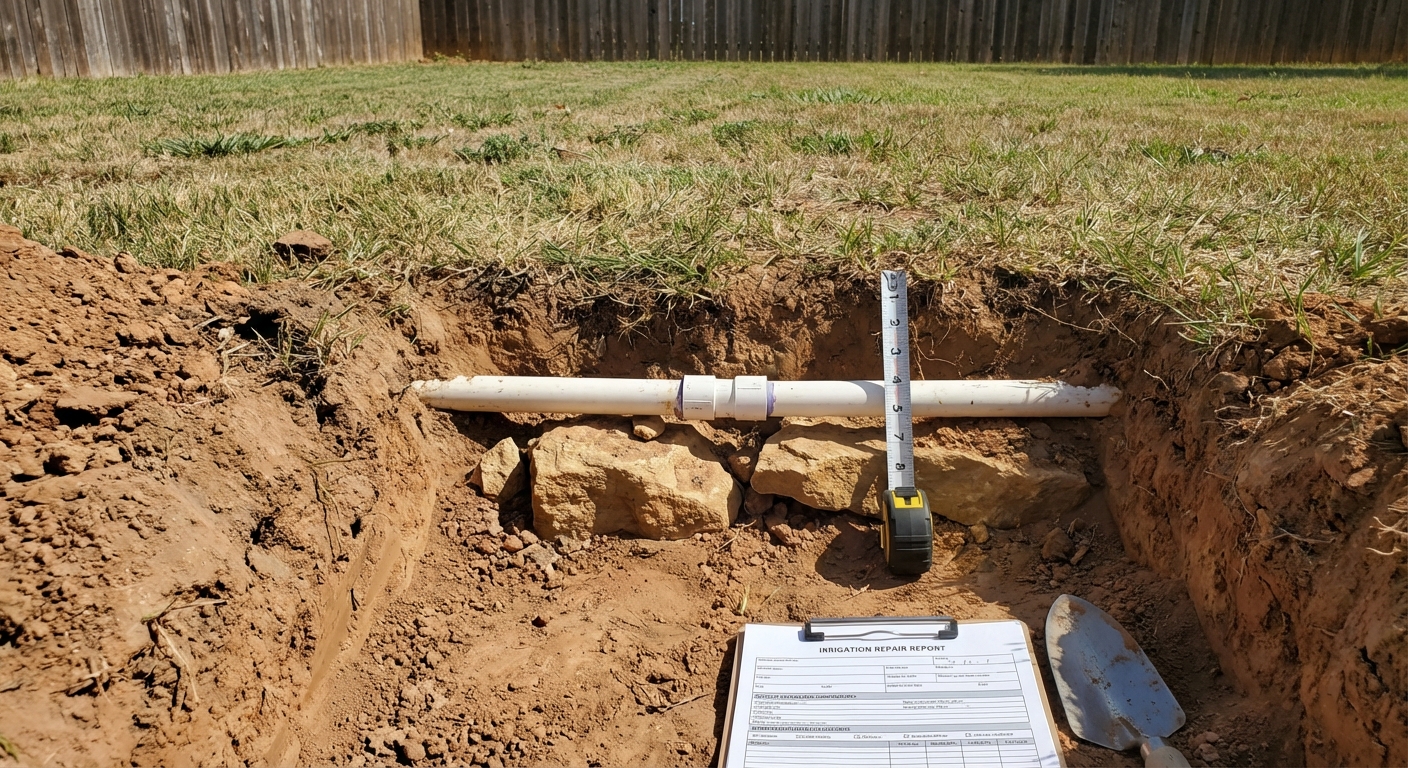
Rockwall is named after underground sandstone dikes spanning roughly 20 square miles. Contractors installing sprinkler lines regularly hit rock at unpredictable depths, forcing PVC into shallow paths — sometimes just 2-3 inches below grade. These shallow lines are vulnerable to lawnmower damage, root intrusion, and freeze events. We map pipe depth before making repairs.
- Rock forces pipes to 2-3 inches deep
- Vulnerable to mower strikes and freeze damage
- We map depth before digging to avoid surprises
What We Do
Rockwall Sprinkler Repair & Irrigation Services

Sprinkler System Repair
Broken heads, leaking valves, pipe breaks, wiring faults — we fix the full range of irrigation failures specific to Rockwall’s hard water and geology. Flat-rate quotes before we start, 3-year warranty on every repair.
Schedule Repair
Smart Controller Upgrades
Replace your builder timer with a Rachio WiFi controller. Automatic NTMWD watering day compliance, cycle-and-soak programming for clay soil, and freeze protection. Certified Rachio Pro installer.
Upgrade ControllerThe Rock Wall Under Rockwall
In 1852, settlers digging a well discovered a wall of sandstone running underground — giving the city its name. Geologists later identified these as sandstone dikes intruding through Cretaceous-era Austin Chalk and marl, spanning roughly 20 square miles and reaching heights of 3 to 40 feet.
“Sandstone dikes spanning 20 square miles force irrigation lines into shallow, damage-prone paths — sometimes just 2-3 inches below grade.”
For irrigation, this matters more than you'd think. Contractors installing sprinkler lines regularly hit rock at unpredictable depths, which forces PVC into shallow paths that are vulnerable to lawnmower damage, root intrusion, and freeze events. We've repaired systems across Rockwall where pipe was installed just 2-3 inches deep because the original installer hit rock and went around it.
The soil profile adds another layer of complexity. Sandy loam near the lake drains quickly and needs shorter, more frequent watering cycles. Heavy clay further inland holds moisture and swells, putting pressure on buried pipe. Properties in the transition zone — and there are many — can have both soil types in a single yard, requiring zone-by-zone programming that most contractors skip.
As a sprinkler repair company that works in Rockwall every week, we've mapped these geological patterns across dozens of neighborhoods — from The Shores to Chandlers Landing — so we know what to expect before we start digging.
Lake Ray Hubbard Water Quality & Your Irrigation System
Rockwall's municipal water comes from Lake Ray Hubbard, a reservoir with naturally high mineral content. Understanding how this water affects your irrigation components is key to preventing costly failures and keeping your system efficient.

Mineral Scaling on Nozzles
CriticalCalcium and magnesium deposits accumulate on nozzle openings and internal screens, progressively restricting water flow. A nozzle rated for 2 GPM can drop to 1.2 GPM within 6-8 months without maintenance, creating uneven coverage across the zone.

Valve Diaphragm Degradation
High ImpactHigh TDS water attacks the rubber diaphragms inside solenoid valves, causing them to harden, crack, and fail to seal. Zones start weeping or won't shut off completely. In Rockwall, we replace diaphragms on a 3-4 year cycle instead of waiting for failure.

Algae & Bio-Fouling
High ImpactLakefront humidity accelerates algae growth inside spray heads and on nozzle screens. Affected heads put down less water than the controller expects, creating invisible dry spots. Regular screen cleaning prevents costly zone failures.

Brass Fitting Corrosion
ModerateMineral-rich water accelerates galvanic corrosion at brass-to-PVC transition points. Green oxidation buildup weakens threads and causes slow seepage that often goes unnoticed until the fitting fails under pressure.
Local Expertise
Rockwall Neighborhoods We Serve
The Shores
Premier lakefront community with direct Lake Ray Hubbard access. Large lots with extensive irrigation systems face maximum wind exposure and hard water stress. Sandy loam soil near the water drains fast — shorter, more frequent cycles are essential. HOA landscape standards require professional-grade coverage.
The Harbor
Mixed-use lakefront development with residential homes, retail, and entertainment. Properties here deal with urban heat island effects plus lake wind — a combination that stresses turf and irrigation equally. Compact lots need precise coverage with zero overspray onto shared hardscape.
Gideon Grove & Nelson Lake Estates
Newer subdivisions on fill soil still settling after construction. Heads sink below grade, pipes shift at joints, and coverage degrades within the first 5-7 years. Proactive audits catch settling damage before it becomes an emergency repair.
Chandlers Landing
Established waterfront community with mature landscaping and aging irrigation infrastructure. Original systems are 15-25 years old and reaching end-of-life on valves and controllers. Lake proximity means accelerated mineral scaling on every component. We provide full system audits and phased upgrade plans.
Buffalo Creek
Master-planned community with a mix of established and newer construction. Dual soil profile — clay inland, sandy loam toward the lake — means zone-by-zone programming is critical. Builder-installed systems often treat the entire lot as one soil type, causing both flooding and dry spots.
Stone Creek Estates & Lago Vista
Upscale neighborhoods where HOA compliance matters. Maintaining green lawns under Rockwall’s 2-day watering restrictions requires smart controllers, efficient nozzles, and proper cycle-and-soak scheduling — not more water. We set up systems that keep HOAs happy without wasting a gallon.
Don't see your neighborhood? We serve all of Rockwall and surrounding areas.
Rockwall Water Restrictions
Rockwall follows NTMWD watering restrictions. Current rules and prohibited practices from official city sources.
1 day per week (winter); 2 days per week (summer)
Currently 1 day per week (Nov–Mar). Changes to 2 days per week Apr–Oct.
No watering between 10:00 AM and 6:00 PM; hand watering with shutoff nozzle allowed anytime; drip irrigation and soaker hoses permitted any day
City ordinance enforced year-round
PROHIBITED PRACTICES
- Using irrigation systems that water hard surfaces (sidewalks, driveways, streets)
- Outdoor watering during precipitation or freeze events
- Failing to maintain sprinkler systems in a manner that causes water loss
- Creating excess runoff or other obvious water waste
- Watering between 10:00 AM and 6:00 PM
Set It and Forget It
Ask about our Smart Controller installs that adjust automatically to weather conditions and city restrictions.
Get Smart Controller QuoteWater-Saving Upgrades for Rockwall
Upgrades that reduce water waste, protect against hard water damage, and keep you compliant with NTMWD restrictions.
Rachio Smart Controller
Weather-based controller automatically adjusts to real conditions and enforces your NTMWD watering day. Freeze protection suspends watering during cold snaps. As certified Rachio Pro installers, we configure cycle-and-soak schedules specifically for Rockwall’s dual soil profile.
Available for all Rockwall homes. Professional installation and configuration included.
Inline Filtration System
Sediment and mineral filters installed at the point of connection protect every downstream component from Lake Ray Hubbard's hard water. Extends nozzle and valve life significantly — from 3-5 years to 8-10 years on valves alone.
Recommended for all Rockwall irrigation systems. Quarterly filter maintenance included with service plans.
MP Rotator Nozzle Conversion
Multi-stream rotary nozzles deliver water at 0.4-0.6 inches per hour — matching clay soil absorption rates. Less runoff, deeper root penetration, and better wind resistance than standard spray nozzles.
Threads onto existing spray bodies. No trenching required. Immediate water savings on every converted zone.
Professional Credentials
Licensed & Insured
TCEQ Licensed Irrigator LI0023963
Certified Rachio Pro
Professional smart controller installer
EPA WaterSense Certified
Certified Irrigation Auditor — rare in DFW
Rockwall Sprinkler Repair FAQs
How much does sprinkler repair cost in Rockwall, TX?
We quote flat-rate for every repair — you know the price before we start. Most Rockwall service calls fall in the $250 to $600 range depending on what we find. Hard water scaling and shallow pipe over sandstone are common cost factors here. If something unexpected comes up during repair, we bring you a revised estimate and let you decide how to proceed. No clock running in the background.
Do I need a permit for sprinkler work in Rockwall?
Rockwall has irrigation code under Ordinance No. 09-13. Most repair work doesn’t require a permit, but new installations and major modifications do. As a TCEQ Licensed Irrigator (LI0023963), we handle permit requirements when needed and ensure all work meets local code.
How long does a sprinkler system last in Rockwall?
A well-maintained system can last 20-30 years, but Lake Ray Hubbard’s hard water shortens component life significantly. Expect 3-5 year valve lifespan in Rockwall versus 8-10 years in low-mineral areas. Nozzles need cleaning or replacement every 6-12 months. Inline filtration and regular maintenance extend everything.
Does Lake Ray Hubbard water damage sprinkler systems?
Yes. NTMWD-supplied water in Rockwall has 140-180 PPM mineral content — moderate to high. This causes calcium and lime buildup on sprinkler nozzles, clogs drip emitters, degrades valve diaphragms, and corrodes brass fittings faster than low-mineral areas. We recommend annual nozzle cleaning, quarterly filter checks on drip zones, and a 3-4 year valve diaphragm replacement cycle.
Why is my water pressure low near Lake Ray Hubbard?
Low pressure in Rockwall usually comes from mineral buildup inside valves and partially clogged nozzles — not the water supply itself. Scale deposits restrict flow progressively, so you won’t notice until coverage fails. Another cause is an undersized meter on large lakefront lots. We diagnose the actual cause before recommending fixes.
When should I start my sprinklers in spring in Rockwall?
March, after the last freeze risk passes — typically mid-March in the DFW area. Before running your system, do a manual zone-by-zone walkthrough to check for cracked fittings, sunken heads, and any freeze damage to exposed backflow preventers. If you have a Rachio controller, it will hold off automatically until conditions are right.
What is Rockwall’s watering schedule?
Rockwall follows NTMWD’s 5-zone Mon-Fri rotation — no weekend watering. No irrigation between 10 AM and 6 PM from April through October. Hand watering with a shut-off nozzle is allowed any day. Drip irrigation and soaker hoses for foundation watering are exempt from the schedule and permitted daily.
Can I water my foundation every day in Rockwall?
Yes. Rockwall’s NTMWD-based rules permit drip irrigation and soaker hoses for foundation watering any day of the week — no restrictions. This is especially important in Rockwall where clay and marl soils expand and contract with moisture changes, stressing foundations. We install dedicated foundation drip zones that provide slow, consistent moisture without triggering watering ordinance violations.
My HOA says my lawn must be green but Rockwall limits watering — what do I do?
This is a real tension point in communities like The Shores, Chandlers Landing, and Stone Creek Estates. The answer isn’t more water — it’s smarter water. A Rachio smart controller with cycle-and-soak programming, MP Rotator nozzles matched to soil absorption rates, and proper head spacing eliminate dry spots while staying under NTMWD limits. We set up systems that keep your HOA happy without wasting a gallon.
Why are there dry spots in my Rockwall yard despite watering?
Four common causes in Rockwall: (1) Hard water scale clogging nozzles reduces flow to individual heads. (2) Wind drift off the lake throws spray patterns onto hardscape. (3) Clay soil compaction prevents water penetration. (4) Head spacing doesn’t account for Rockwall’s dual soil profile — sandy near the lake, clay inland. A zone-by-zone audit identifies which factor is at play.
What is the rock formation under Rockwall and does it affect irrigation?
Rockwall is named after underground sandstone dikes that intrude through Cretaceous-era marl, spanning roughly 20 square miles. These rock formations force irrigation installers to route PVC lines at shallow, inconsistent depths — sometimes just 2 to 3 inches below grade. This makes pipes vulnerable to lawnmower damage, root intrusion, and temperature extremes. We map pipe depth before making repairs.
Should I upgrade to a smart controller in Rockwall?
If you’re still running a basic timer, yes. Rachio smart controllers automatically enforce your NTMWD watering day, adjust runtimes based on weather, and enable cycle-and-soak programming for clay soil. Freeze protection suspends watering during cold snaps. As certified Rachio Pro installers, we handle the full setup including WiFi, zone mapping, and soil-specific scheduling.
Can you repair sprinklers that draw lake water in Rockwall?
Yes. Some lakefront properties draw irrigation water from Lake Ray Hubbard. We repair the sprinkler system downstream of the intake: heads, valves, lines, controllers and drip. We do not repair pumps, intakes or booster pumps.
Can you repair sprinklers that run off a well in Rockwall?
Yes. Some Rockwall properties, especially larger lots and rural-adjacent areas, run irrigation off private wells. We repair the sprinkler system downstream of the well: heads, valves, lines, controllers and drip. We do not repair wells, pumps, pressure tanks or pump-start wiring, and we do not do drinking-water work.
Lakeside Sprinkler Expertise for Rockwall
From lakefront estates to new subdivisions, we keep Rockwall irrigation systems running efficiently despite the hardest water in DFW. Licensed, certified, and on your side of the lake.
Quick Links to Our Services
Sprinkler & Irrigation Services in Rockwall
Sprinkler Repair in Rockwall
Fast, reliable repairs for broken sprinkler heads, leaks, and system malfunctions.
→Valve Repair & Replacement in Rockwall
Expert repair and replacement of irrigation valves to restore proper water flow.
→Sprinkler Head Replacement in Rockwall
Replace damaged or inefficient sprinkler heads with modern, water-saving models.
→Valve Locating in Rockwall
Professional equipment to find buried irrigation valves hidden under grass, mulch, or concrete.
→Wiring & Electrical in Rockwall
Diagnose and repair irrigation wiring issues, faulty solenoids, and controller problems.
→Sprinkler Inspection in Rockwall
Comprehensive system inspections to identify issues before they become costly problems.
→Maintenance & Winterization in Rockwall
Seasonal maintenance, spring startups, and winterization to protect your investment.
→Smart Controller Installation in Rockwall
Rachio Pro Series installation. Save up to 40% on water with WiFi-enabled smart irrigation controllers.
→Rachio Repair & Troubleshooting in Rockwall
Rachio not working? It is usually not the Rachio. Diagnostic-first service for controllers and the zones they run.
→Flow Meter Installation in Rockwall
Irrigation flow meters with leak alerts and auto-shutoff. Solar wireless link when the meter and controller are separated by concrete.
→Foundation Watering Systems in Rockwall
Drip-based foundation watering systems to protect DFW slabs from clay soil movement.
→Irrigation Audit in Rockwall
EPA WaterSense certified irrigation audit — coverage, distribution uniformity, and water savings report.
→Backflow Preventer Repair in Rockwall
Repair and replacement of failed, leaking, or freeze-damaged backflow preventers. Testing referred to licensed testers.
→Homeowner Resources
Not sure where to start? Our sprinkler repair cost guide explains what common repairs involve and what drives the price, the DFW seasonal watering schedule shows what your controller should be doing right now, and if a zone has gone quiet, the sprinkler not turning on guide walks the diagnosis step by step.
Nearby Service Areas
We also serve communities near Rockwall. Click to learn about irrigation services in these areas.
Last updated: