
Protect your investment - schedule maintenance today

Drip irrigation · Garland and DFW

Drip Irrigation Installation & Repair

Short answer

Use drip in flower beds, gardens, shrub beds and tree rings. Spray heads throw water onto mulch and walks. Drip puts it at the roots.

We install new drip zones, convert existing spray heads, and repair drip lines across Garland and DFW.

Why drip

Why Choose Drip Irrigation for Beds and Trees

Spray heads in a planting bed throw water onto mulch, walks and windows. Drip puts it at the roots, slowly enough for DFW clay to take it in.

  • Less water on your bill, and none wasted on hardscape
  • Dry foliage, so less fungal disease
  • Fewer weeds between plants
  • Works with smart controllers like Rachio
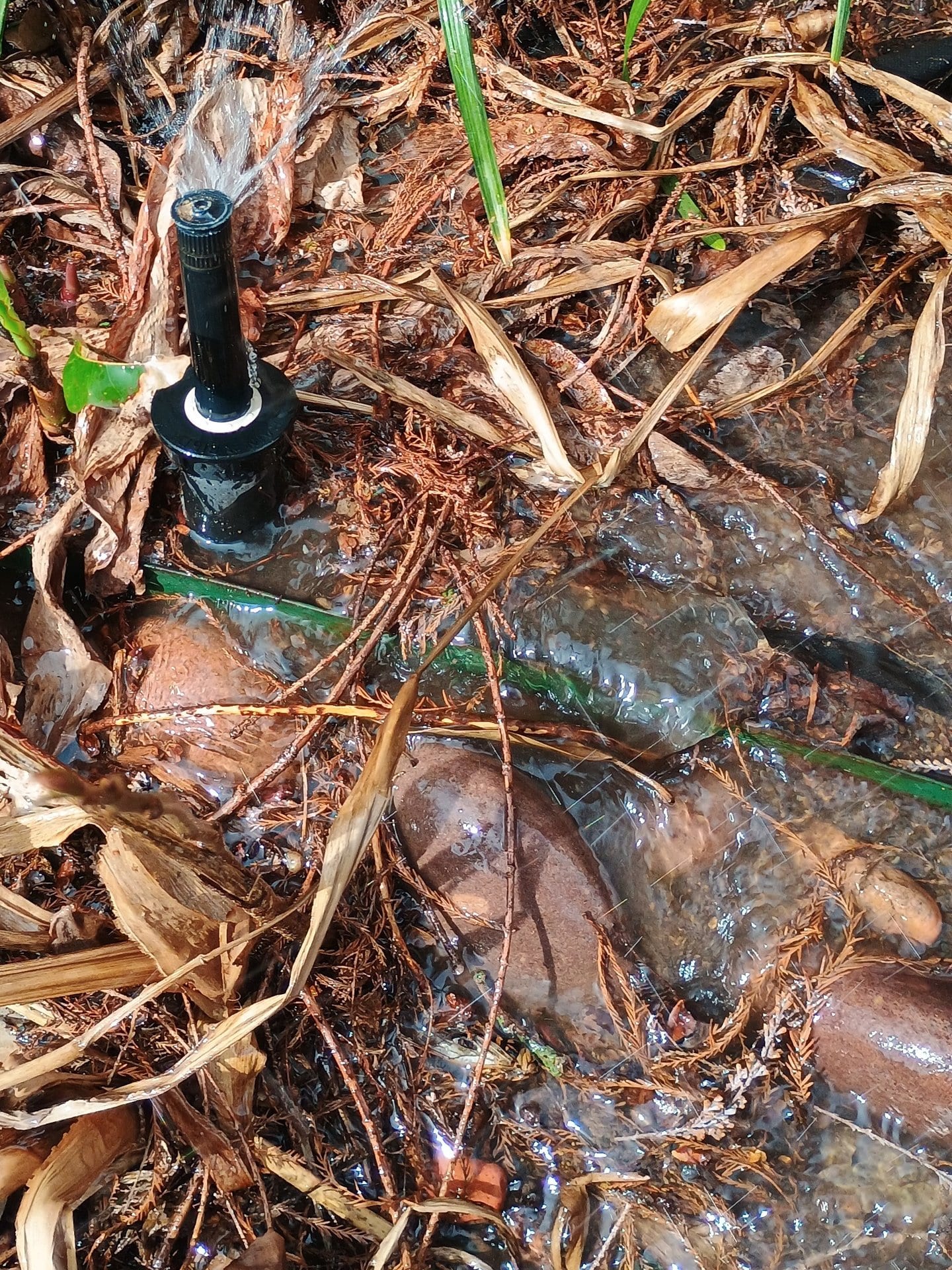
Spray head in a mulch bed throwing water across the ground

What we do

Our Drip Irrigation Services

  • New drip zone installation

    Flower beds, gardens and shrub beds, with emitter spacing set by plant type, soil and sun.

  • Spray-to-drip conversion

    Swap spray heads in narrow strips and foundation beds for drip. Your valve and timer stay the same.

  • Drip line repair

    Broken tubing, clogged emitters, worn filters and regulators.

  • Micro-spray and micro-bubbler systems

    For larger shrubs and small areas that need more flow than a drip emitter.

  • Tree ring irrigation

    Dedicated drip rings around new and established trees.

  • Garden bed drip systems

    Adjustable layouts for vegetable gardens and perennial beds that change season to season.

How it works

Our Drip Irrigation Installation Process

  1. 1

    Assess the landscape

    We look at your beds, trees, soil, sun exposure and the irrigation you already have.

  2. 2

    Design the layout

    Line routing, emitter spacing and pressure regulation planned around your plants.

  3. 3

    Install the system

    Drip lines, emitters, filter and regulator, tied into an existing zone or a new one with backflow protection.

  4. 4

    Adjust and hand off

    We tune flow and emitter placement, show you basic maintenance, and set the controller schedule.

Drip Irrigation FAQs

How much does drip irrigation installation cost?+
Drip irrigation installation typically ranges from $400-$1,500 for a standard flower bed or garden zone, depending on size and complexity. Spray-to-drip conversions are usually $200-$600 per zone. Factors include area size, number of emitters, line routing difficulty, and whether we're creating a new zone or converting an existing one. Tree ring systems start at $150-$300 per tree. We provide free quotes with detailed pricing based on your specific landscape needs.
Can I convert my existing spray heads to drip irrigation?+
Yes! Spray-to-drip conversion is one of our most popular services. We replace the spray head with a drip conversion kit that includes a pressure regulator, filter, and drip line distribution. This works great for narrow planting strips, foundation beds, and areas where spray heads waste water on hardscape. Your existing zone valve and timer control remain the same - we just change what happens at the spray head location. Most conversions take 1-2 hours per zone.
Is drip irrigation better than spray heads for flower beds?+
Absolutely! Drip irrigation is far superior for flower beds, gardens, and shrub beds in North Texas. Benefits include: 90%+ application efficiency vs. 50-65% for spray heads, no water waste on mulch or hardscape, reduced fungal disease from wet foliage, minimal weed growth between plants, and better performance in DFW's clay soil which absorbs water slowly. Drip irrigation delivers water at the rate clay soil can absorb it, preventing runoff and ensuring deep root zone penetration. Most homeowners see 20-50% lower water usage on converted zones. The only drawback is slightly higher installation cost, which pays for itself in 2-3 years through water savings.
How do I maintain drip irrigation lines?+
Drip irrigation requires minimal maintenance but a few key tasks: (1) Flush lines twice per year by opening the end caps to clear debris, (2) Check emitters monthly during growing season to ensure they're flowing properly, (3) Replace the inline filter annually or when clogged, (4) Inspect lines for damage from landscaping activities or animals, and (5) Adjust emitter placement as plants grow. Most homeowners can handle basic maintenance, but we offer seasonal tune-up services if you prefer professional care. The filter and pressure regulator are critical - keep them clean for best performance.
Does drip irrigation work with smart controllers like Rachio?+
Yes! Drip irrigation works perfectly with smart controllers like Rachio, RainMachine, and Hunter Hydrawise. The smart controller manages the zone just like any other irrigation zone. The key is setting the correct zone type to "Drip/Bubbler" in the controller app so it calculates proper run times. Drip zones typically run 45-90 minutes 2-3 times per week vs. 10-15 minutes for spray zones. Smart controllers excel at adjusting drip schedules based on weather, which is crucial for North Texas' variable rainfall and hot, dry summers.
How much water does drip irrigation save compared to spray heads?+
Drip irrigation typically saves 30-50% water compared to spray heads for the same planting area. For a typical 500 sq ft flower bed in DFW, spray heads might use 300-400 gallons per watering, while drip irrigation uses 150-250 gallons for better results. Annual savings can reach $200-$400 per zone depending on water rates and landscape size. The savings come from eliminating overspray, reducing evaporation loss, preventing runoff on clay soil, and precise delivery only to planted areas.

Ready to Save Water with Drip Irrigation?

Get a free consultation and quote for drip irrigation in Garland and DFW, from new zones to spray-to-drip conversions and repairs.

Licensed Texas Irrigator

Last updated: