How to Clean Artificial Turf
Waste up, debris off, rinse, enzyme cleaner on the pet spots, brush the fibers back up. Published turf care routines put that weekly round at about 15 to 20 minutes. The whole procedure is right here, and the detail is below it.
Would rather hand it off? See what artificial turf cleaning covers.
- 1
Pick up the solid waste first
Bag it and take it out. Do not hose it into the turf. ForeverLawn puts this in its K9Grass guidelines as a flat rule, and the trade process guides say the same thing for a practical reason: a cleaner sprayed over debris is wasted product.
- 2
Clear the loose debris
A leaf blower is the fastest way. A plastic leaf rake works too. Not a metal one, for the reason in the next section.
- 3
Rinse the surface with a garden hose
Plain water, whole area. ForeverLawn tells owners to rinse between cleanings if they are not getting regular rain, which describes most of a North Texas summer.
- 4
Treat the pet spots with an enzyme cleaner made for turf
Mix and apply it the way the bottle says, then leave it wet for the full dwell time on that label. Letting it dry early is the most common reason a treatment does nothing. Follow the product label, not a number off a web page.
- 5
Brush the fibers up against the grain
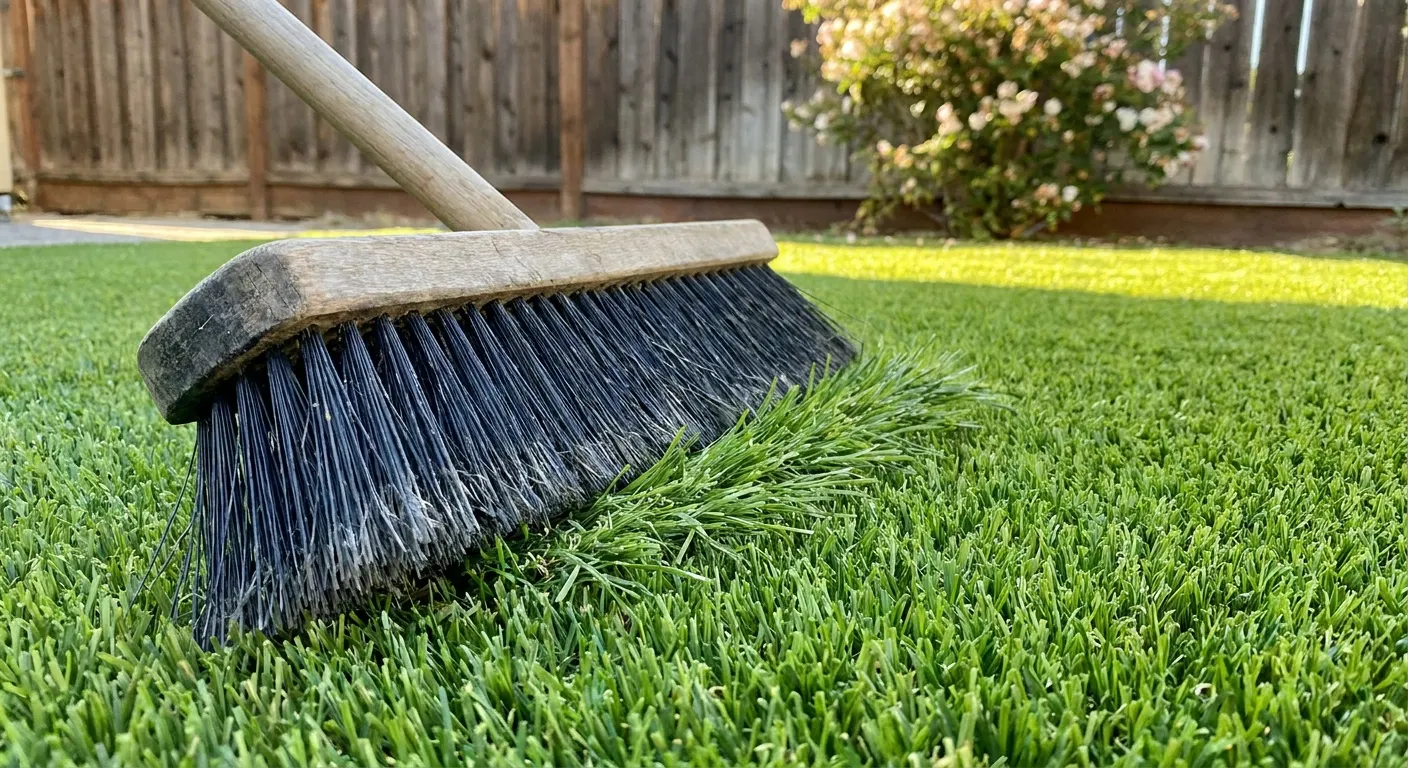
A stiff broom with synthetic bristles, worked against the nap. SYNLawn calls this cross brushing and says it is what restores the look of a flattened pile.
How often to clean artificial turf
Nothing on this list is hard. The part people get wrong is the monthly one, because infill works its way down and out of sight, and a low infill line is what leads to matting and drainage trouble later.
| How often | What you do | Roughly |
|---|---|---|
| Every day, if you have dogs | Pick up solid waste | 5 to 10 minutes |
| Weekly | Brush, blow, rinse | 15 to 20 minutes |
| Monthly | Part the fibers, check the infill line, spot treat | 20 to 30 minutes |
| Every few months | Work the whole surface instead of the spots | 2 to 3 hours |
ForeverLawn adds a separate line for pet hair and fine debris: a vacuum run over dry turf about once a month for a typical area, weekly where use is heavy. It also tells owners to rinse between cleanings when they are not getting regular rain, which is most of a North Texas summer.
Straight from the manuals
What not to use on artificial turf
These are the turf makers' own words, not ours. Warranty terms and care rules differ by brand, so the list that governs your lawn is the care sheet that came with it.
Metal rakes and wire brushes
SYNLawn care manual, p.5"Never use a brush with metal or wire bristles as these will change the turf fibers." Use synthetic bristles for anything that touches the pile.
Chlorine bleach, strong caustics, strong acids
SYNLawn care manual, p.3"DO NOT USE cleaners that contain chlorine bleaches or caustic cleaners (ph above 9) or highly acidic cleaners (ph below 5)." Turf care guides add a second reason to skip bleach on a pet area: bleach and urine together can give off chloramine gas.
High-pressure water
SYNLawn care manual, p.5"Do not use high-pressure water spray with stream force in excess of 300 psi as this can severely damage the turf and displace any infill material."
300 psi
The number that decides whether you pressure wash artificial turf
That is the cap SYNLawn puts in its own care manual: no water spray with stream force over 300 psi, because it can severely damage the turf and displace the infill. MSI does not set a number at all. Its Evergrass care page says simply: “Never use a power washer.”
Two manufacturers, two different answers, and that is the useful part. Every brand publishes its own rules, and the one that applies to your lawn is the one that came in the folder with it. Find that sheet before you point a pressure washer at anything.
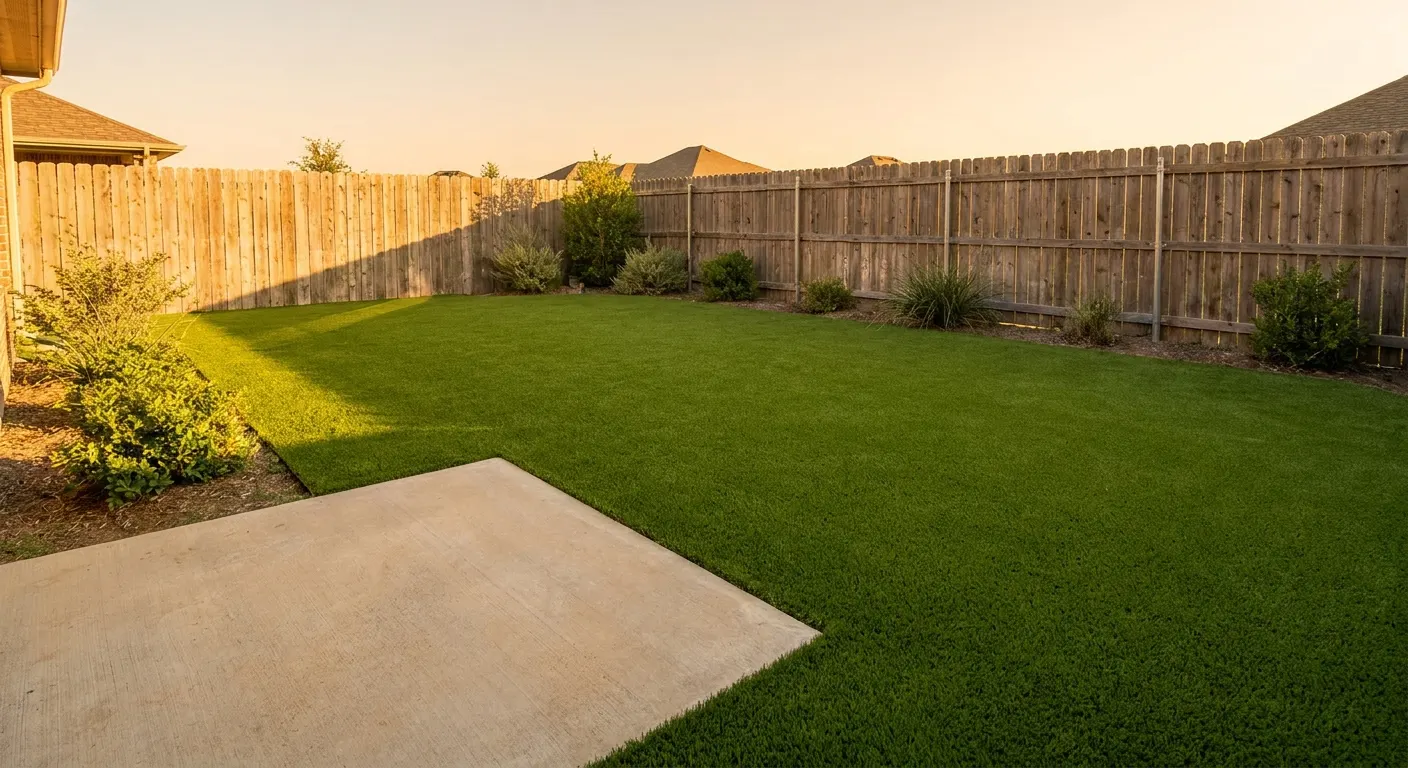
When cleaning artificial turf needs more than a hose
Water dilutes and redistributes what is on the turf. It leaves the urine salts behind in the infill, and they go back to work on the air the moment the surface dries. Dried urine residue is not water soluble and it re-forms with humidity, which is the reason a rinse reads as a fix for about a day.
That is what an enzyme cleaner is for, and why the dwell time on the label matters more than how hard you scrub. The product has to stay wet long enough to work down into the infill, where the residue actually sits.
If the odor is the main reason you are reading this, go to artificial turf and dog urine smell, which covers where the smell lives and what reaches it.
Four signs a rinse is no longer the answer
- The smell comes back on the first hot afternoon after a rinse. That is old residue releasing, not new urine.
- Water pools on top instead of moving down through the backing.
- The pile stays flat after you brush it, which usually means the infill line has dropped.
- Several weeks of proper enzyme treatments have not cut the odor by much.
If you clean artificial turf that sits over a sprinkler system
We keep finding artificial turf laid straight over irrigation valve boxes. The good installers cut an access plug so the lid can still come up. The rest cover the box and nobody knows until a valve needs work.
If yours has plugs, cleaning day is a good time to notice them. Keep the cut edges clear, brush around them rather than over them, and make sure the plug still lifts. If you cannot find any, that is worth sorting out before something fails under there.
The full version is in artificial turf and your sprinkler system.
Rather not clean artificial turf yourself?
We are adding artificial turf cleaning for North Texas yards. Tell us the size of the area and how many dogs use it, and we will tell you what the visit involves before anything is booked.
How to clean artificial turf: common questions
How do you clean artificial turf at home?
How often should artificial turf be cleaned?
Can you pressure wash artificial turf?
What should you not use on artificial turf?
Does rinsing artificial turf with a hose remove pet odor?
Will cleaning artificial turf void the warranty?
Related artificial turf guides
- Artificial Turf and Dog Urine SmellWhere the odor actually sits, why heat brings it back, and when cleaning stops being the fix.
- Artificial Turf and Your Sprinkler SystemValve box access, what happens to the heads, and the checklist before turf goes down.
- Artificial Turf CleaningWhat the service covers and how to get a look at your yard.
Sources
- SYNLawn Care and Maintenance Manual (doc SCM.v230517): chlorine bleach, caustic and acidic cleaners prohibited p.3; the 300 psi spray cap and the metal-bristle caution p.5; cross brushing with synthetic bristles p.5; enzyme neutralizers for pet odor p.4; care-guideline compliance as a warranty condition p.2.
- MSI Evergrass turf care and maintenance page: “Never use a power washer.” The same page recommends a hose with a sprinkler or spray nozzle instead, so the water can drain.
- K9Grass by ForeverLawn Maintenance Guidelines (M0085 Rev. 02/25, k9grass.com): do not rinse solid waste into the grass; vacuum dry turf about monthly, weekly in high-use areas; rinse between cleanings without regular rain; leave the enzyme product on longer for best results; harsh chemicals may limit the liability claim.
- The Turf Cleaning Handbook, professional process and DIY chapters: remove debris before any product is applied; dwell time decides whether a treatment works; the weekly, monthly and quarterly time figures. This is a trade publication produced by a working operator, not an independent standard.
Last updated: