
Your lawn looks dry on top, but when you walk across it, your shoes sink into mud. The water bill keeps climbing, but the grass isn't thriving. Welcome to the reality of watering North Texas clay soil with the wrong irrigation setup.
Here's the thing: most sprinkler systems apply water way too fast for clay soil to absorb it. And that mismatch between your equipment and your soil type is costing you money, wasting water, and frustrating the heck out of you every summer.
But it doesn't have to be this way.
What you'll learn:
- Why most sprinklers apply water 10-20x faster than clay can absorb it
- Which sprinkler heads actually match North Texas clay soil absorption rates
- How to program cycle-and-soak watering to eliminate runoff
- Smart controller settings specific to DFW clay soil and slopes
- When to upgrade equipment vs just reprogram what you have
Time needed: 15-20 minutes to audit your system
Difficulty: Beginner-friendly (most fixes are programming changes, not equipment replacement)
- Most sprinklers apply water 10-20x faster than clay can absorb
- Rotor heads match clay absorption rates far better than spray heads
- Cycle-and-soak programming eliminates runoff
- Smart controller clay settings can cut waste by 40-50%
- Core aeration + compost is the only long-term soil fix
Understanding North Texas Clay Soil (Why Your Yard Is Different)
If you live anywhere in the DFW Metroplex -- Garland, Plano, Richardson, Rowlett, Allen, or beyond -- there's a good chance your yard is sitting on black clay. We're talking about soil that's 50-60% clay particles, according to Texas A&M AgriLife Extension.
Clay soil has some characteristics that make irrigation design tricky. Actually, "tricky" is generous. Let's call it what it is: a physics problem most homeowners don't know they have.
It absorbs water incredibly slowly. We're talking about 0.1 to 0.2 inches per hour on flat ground. On a slope? That drops to as little as 0.05 inches per hour. Clay particles are so tiny and packed so tightly that water can't move through them quickly.
Here's why this matters. Imagine trying to pour a gallon of water through a coffee filter versus a screen door. Clay is the coffee filter -- it holds water back, forcing it to penetrate slowly through microscopic spaces between tightly-packed particles. Sandy soil is the screen door -- water drains through immediately.
This physical limitation means clay soil has an upper speed limit for absorption that no amount of watering pressure can overcome.
But once water gets in, it doesn't want to leave. Clay can hold up to 1.70 inches of water in a 10-inch root zone (Clemson University research). That's great for drought tolerance once you've watered properly -- but it also means overwatering leads to soggy, oxygen-starved roots that invite disease.
It expands and contracts with moisture. This is the foundation issue every North Texas homeowner knows about. When clay dries out, it shrinks. When it gets wet, it swells. That movement can crack foundations if your irrigation isn't delivering consistent, controlled moisture around your house perimeter. A dedicated foundation watering system addresses this with drip lines designed specifically for perimeter moisture control.
The surface lies to you. Clay develops a hard crust when dry that looks like cracked desert soil. But dig down three inches? You might find mud.
Conversely, the surface can look wet and muddy while deeper roots are bone dry. You can't trust what you see on top.
After installing and servicing irrigation systems across 15 cities in the DFW Metroplex -- from the dense clay in Garland and Richardson to the variable soils in Lucas and Heath -- we've learned that most irrigation problems on clay soil aren't about broken equipment. They're about systems designed for loam or sandy soil trying to work on clay.
It's like wearing snow boots to the beach. Wrong tool, wrong situation.
The Precipitation Rate Mismatch (Why You're Getting Runoff)
Here's the math that's killing your lawn.
Most standard spray head sprinklers apply water at 1.5 to 3.0 inches per hour (Rain Bird technical specs). Some high-output heads push even more.
But your North Texas clay soil can only absorb 0.13 inches per hour on flat ground (USDA NRCS Irrigation Toolbox).
Do that math. Your sprinklers are applying water 10 to 20 times faster than your soil can drink it.
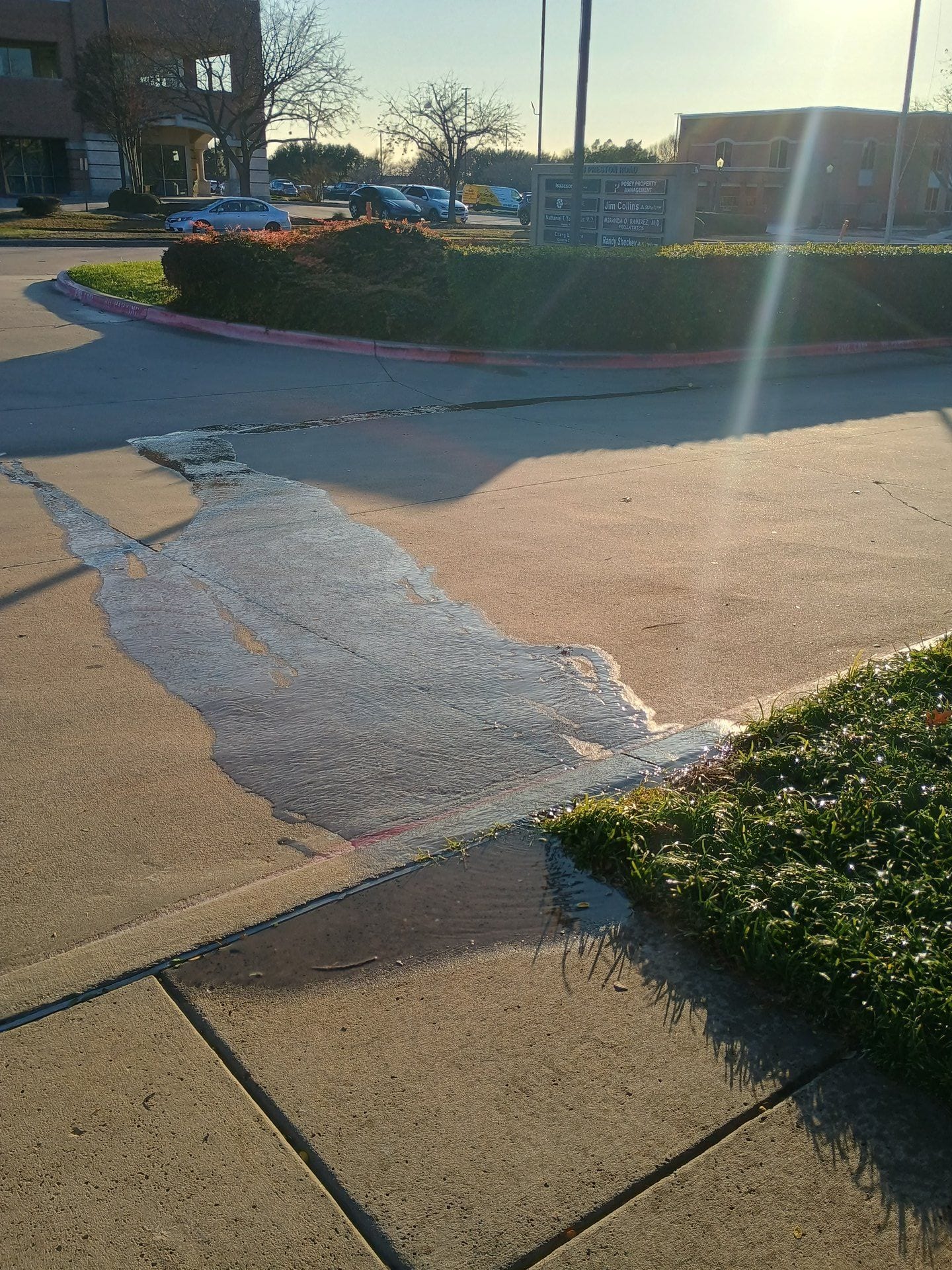
What happens to the excess? It runs off. Down your driveway, into the street, toward storm drains. You're literally paying to water the city's drainage system.
Even "better" spray heads that apply 1.5 inches per hour are still 10 times too fast for clay. The water hits the surface, pools, and runs to low spots before it has time to soak in.
And if your yard has any slope at all, the problem gets worse. On a 12% grade -- pretty common in North Texas landscaping -- clay absorption drops to just 0.05 inches per hour.
Now those spray heads are 30 to 60 times too fast.
When we perform irrigation audits in Plano and Richardson, we see this mismatch constantly. Homeowners watch water sheet down their sloped yards and assume they have a broken zone. But when we measure the precipitation rate and soil infiltration, the problem is usually clear: the equipment is fine, it's just applying water faster than physics allows clay to absorb it.
This isn't a small problem. The EPA estimates that runoff from landscape irrigation is a major source of water waste in Texas, especially in areas with compacted clay soil.
The good news? This is fixable.
You need equipment that matches your soil's absorption capacity, and a watering method that gives clay time to do what it does slowly.
Most irrigation problems on clay soil aren't about broken equipment. They're about systems designed for loam or sandy soil trying to work on clay.
-- Brandon Surratt, Licensed IrrigatorBest Sprinkler Head Types for Clay Soil Irrigation Design
If you're dealing with runoff and want to fix it at the source, start with your sprinkler heads.
Rotary Nozzles and Rotor Heads (The Winners)
These are your best options for clay soil irrigation design. Here's why.
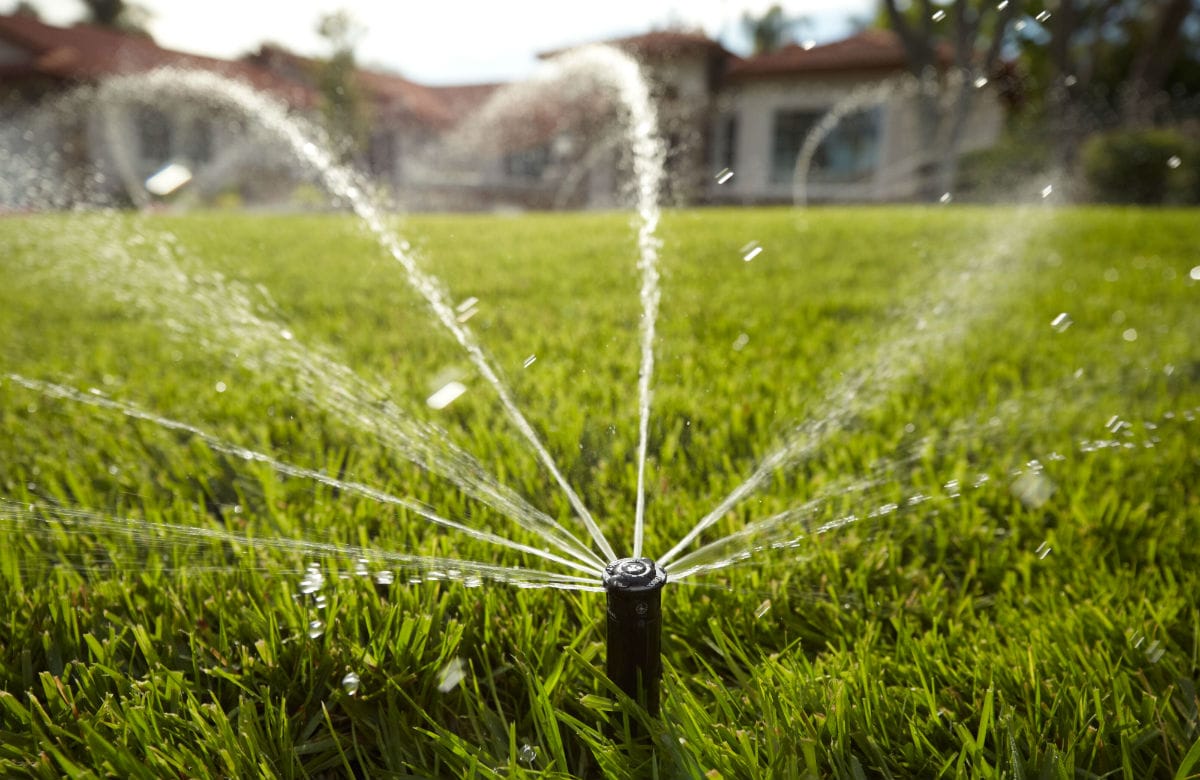
Rotary nozzles apply water at 0.4 to 0.6 inches per hour. That's still a bit faster than clay's 0.13 inch/hour absorption rate, but it's 3 to 5 times closer to the ideal than spray heads. Models like the Hunter MP Rotator and Rain Bird R-VAN Rotary work well in North Texas.
Rotor heads (also called gear-drive rotors) apply water at 0.4 to 1.0 inch per hour depending on the model and settings. The Rain Bird 5000 Series, Hunter PGP Ultra, and Orbit Saturn III are solid choices that we've installed across the DFW area with good results.
These heads work better on clay because they distribute water in rotating streams instead of a constant fan, cover larger areas more slowly, give the soil time to absorb between each rotation pass, and reduce the "firehose effect" that causes instant runoff.
The physical difference matters. A spray head delivers a constant fan of water -- imagine holding your thumb over a garden hose. All the water hits the same area continuously until the surface can't absorb anymore and runoff starts.
Rotor heads deliver rotating streams that sweep across the coverage area, hitting each spot for only a few seconds per rotation. By the time the stream comes back around, that spot has had 30-60 seconds to start absorbing the first pass.
It's a built-in mini cycle-and-soak pattern.
Impact Sprinklers (The Alternative)
Old-school impact sprinklers -- the ones that go "tick-tick-tick" -- also apply water slowly enough for clay. They're not as aesthetically pleasing or as quiet as rotors, but they get the job done. You'll still see them on larger properties in Heath, Lucas, and rural parts of Wylie where coverage area matters more than appearance.
Spray Heads (The Problem)
Standard spray heads are designed for sandy or loamy soil that absorbs water quickly. On North Texas clay, they're almost guaranteed to cause runoff unless you use them with extremely short run times and cycle-and-soak programming (which we'll cover next).
If you already have spray heads installed, you don't necessarily need to dig up your whole system. But you should know they're working against you.
And a head upgrade might be the most cost-effective solution to chronic runoff problems. For a breakdown of what common fixes cost, check our sprinkler repair cost guide.
Cycle and Soak Watering Method (The North Texas Standard)
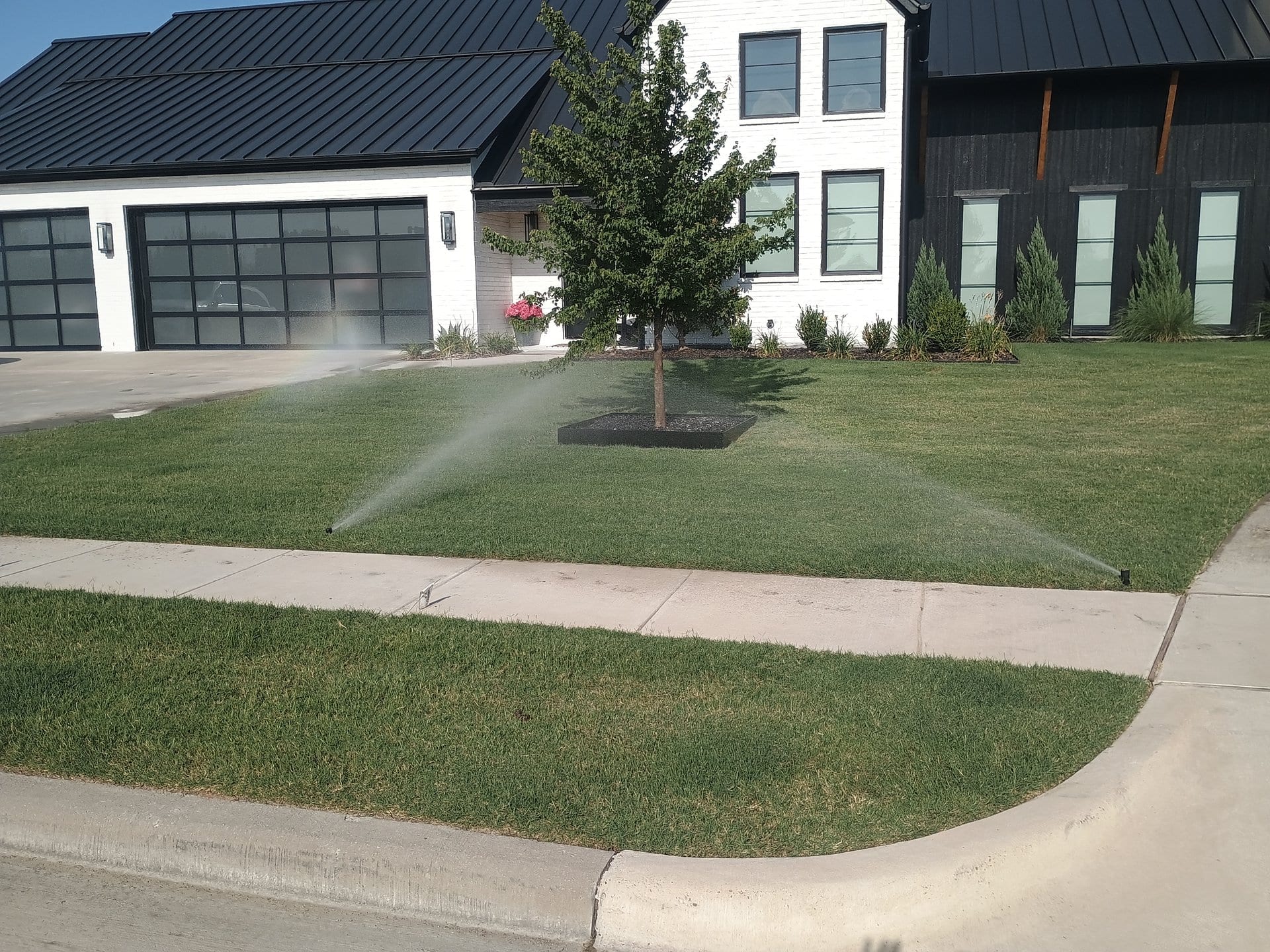
Even with the right sprinkler heads, you can't just turn them on for 30 minutes and walk away. Clay soil needs a different approach.
Enter the cycle-and-soak method, endorsed by Texas A&M AgriLife Extension, the EPA, and pretty much every horticulturist who works with clay soil.
How It Works
Instead of running each zone for one long cycle, you break watering into multiple short cycles with soak time in between.
Example schedule:
- Zone 1 runs for 10 minutes
- System moves to Zone 2, 3, 4, etc.
- After all zones run once, the system waits 30-60 minutes
- Zone 1 runs again for another 10 minutes
- Repeat for 3-4 total cycles
So instead of Zone 1 running for 40 minutes straight, it gets four 10-minute cycles with breaks in between.
Why This Prevents Runoff
The first short cycle breaks the surface tension of the dry clay crust and wets the top layer. During the 30-60 minute soak interval, that water slowly penetrates deeper into the soil profile.
When the second cycle starts, the soil is already primed. Water soaks in more efficiently because the surface isn't sealed anymore. The third and fourth cycles continue this progression, with each round penetrating deeper than the last.
You end up delivering the same total amount of water -- but it all goes into the soil instead of running down your driveway.
This isn't just theory. After programming hundreds of smart controllers across Garland, Allen, Rowlett, and surrounding areas, we've seen lawns go from 40-50% runoff (based on street flow observations) to near-zero runoff just by implementing cycle-and-soak.
Same sprinkler heads, same total run time, completely different absorption results.
Programming Cycle-and-Soak on Your Controller
Most modern irrigation controllers let you set multiple start times per day. Here's how to use that feature for cycle-and-soak.
Calculate your total run time needed (we'll cover this in the next section), divide that time by 3 or 4 to get your cycle length, set 3-4 start times (each spaced 45-60 minutes apart), and set each zone to run for your calculated cycle length.
Example:
- Total needed: 40 minutes per zone
- Divided by 4 cycles = 10 minutes per cycle
- Start times: 5:00 AM, 6:00 AM, 7:00 AM, 8:00 AM
- Zone 1 run time: 10 minutes
The system will run all your zones at 5 AM (10 min each), all zones at 6 AM (10 min each), and so on. By 8:30 AM, you've delivered 40 minutes of total watering with no runoff.
As certified Rachio Pro installers serving the DFW area, we've programmed hundreds of smart controllers specifically for North Texas clay soil. Most quality controllers make cycle-and-soak setup straightforward once you understand the logic. Advanced models can even adjust cycle times automatically based on slope, soil type, and weather data.
Optimal Watering Schedule for DFW Clay Soil
Now that you know how to water (cycle-and-soak), let's talk about when and how much.
Frequency: Twice Weekly Maximum
Push a long screwdriver into your soil. Slides in easily to 6"? You're watered. Stops at 2-3"? Your roots are thirsty.
Many North Texas horticulturists recommend no more than twice per week for established lawns on clay soil, even during peak summer (Texas A&M AgriLife Extension).
Why so infrequent? Because clay holds water.
That 1.70-inch capacity in your root zone means properly watered clay can sustain turf for 3-4 days even in July heat.
Watering more often than twice weekly is usually overwatering. You're not giving the soil time to release moisture between sessions, which leads to shallow root systems (roots stay near the surface where water is constant), fungal diseases that thrive in perpetually damp conditions, and wasted water that the grass can't even use.
Exception: Newly seeded or sodded areas need more frequent watering until established. But once your grass has roots, back off to that twice-weekly rhythm.
Amount: 1 to 1.5 Inches Per Week
Your lawn needs about 1 to 1.5 inches of water per week total during the growing season. That includes rainfall.
On clay soil, it's better to apply that amount in two deep watering sessions (0.5 to 0.75 inches each) rather than lighter, more frequent sessions. Deep watering encourages roots to grow downward where they'll find that moisture clay holds so well.
How to Measure: The Tuna Can Test
Place several empty tuna cans (or any straight-sided containers) around your yard within each sprinkler zone. Run your system through one complete cycle-and-soak session. Measure how much water collected in each can.
If you're getting 0.5 inches after your full cycle-and-soak session, and you're watering twice weekly, you're hitting that 1-inch weekly target. Adjust your cycle lengths up or down based on what the cans tell you.
Timing: Early Morning Wins
Water between 5 AM and 10 AM whenever possible. This timing minimizes evaporation loss (it's cooler), gives grass blades time to dry before evening (reducing fungal disease), and usually complies with municipal watering restrictions.
Avoid watering in the evening. Wet grass sitting through a humid North Texas night is an invitation for brown patch, dollar spot, and other fungal nightmares.
Seasonal Adjustments
Spring (March-May)? Reduce frequency and amount. You might only need once weekly as temperatures are moderate and rain is more common.
Summer (June-September)? Peak watering season. Twice weekly at full amounts.
Fall (October-November)? Taper back to once weekly as temperatures drop and rain returns.
Winter (December-February)? Most North Texas turf goes dormant. You can turn the system off unless we're in an extended drought or you're watering foundation perimeters.
Many cities in our 15-city DFW service area -- including Plano, Allen, and Richardson -- offer smart controller rebates that automatically make these seasonal adjustments based on local weather data. If you're still manually changing your timer every season, you're working harder than you need to.
Programming Your Smart Controller for Clay Soil
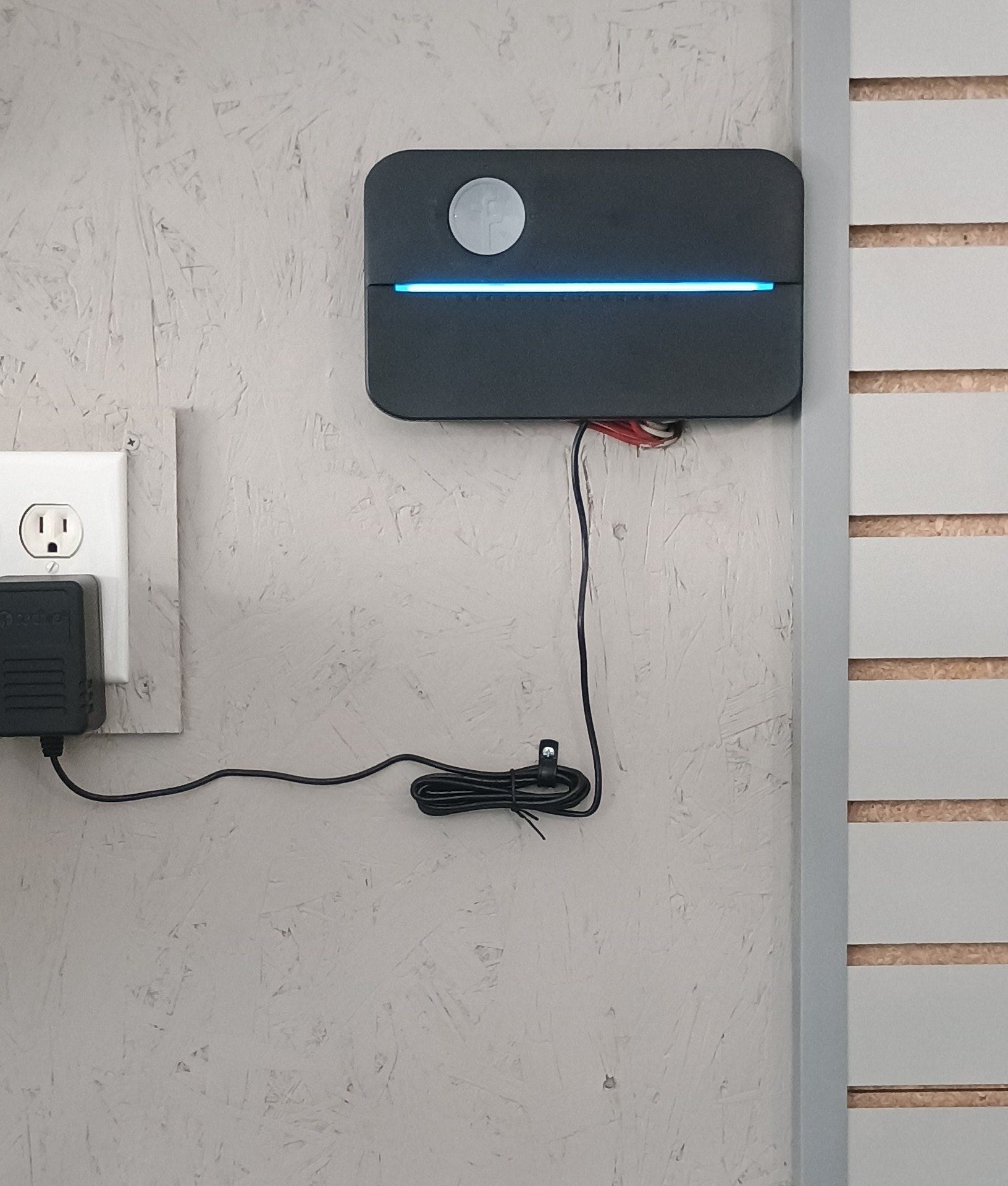
Modern smart irrigation controllers can take most of the guesswork out of watering clay soil -- if you set them up correctly.
Essential Settings for Clay
1. Soil type: Clay or Clay Loam
Most controllers ask you to specify soil type during setup. Choose "clay" or "heavy clay" for most DFW locations. This adjusts how the controller calculates water needs.
This setting isn't just cosmetic. When you tell a smart controller you have clay soil, it adjusts the system's water balance calculations, run time recommendations, and weather-based skip logic. Clay holds more moisture between watering sessions, so the controller will recommend less frequent watering compared to what it would suggest for sandy soil.
2. Slope/grade setting
If your yard has any slope, tell the controller. Even a "slight slope" setting will shorten run times to prevent runoff. Remember: clay on a 12% slope absorbs water at less than half the rate of flat clay.
3. Sun exposure per zone
Zones in full sun all day need more water than zones shaded by trees or structures. Set this for each zone individually.
4. Sprinkler head type
Tell the controller what type of heads you have (spray, rotor, drip, etc.). This affects precipitation rate calculations.
If you upgraded from spray to rotor heads, update this setting -- it makes a difference.
When we configure Rachio smart controllers for DFW homeowners, we've found that many people skip the sprinkler head type setting or leave it on the default. But this setting directly affects how the controller calculates how long to run each zone to deliver your target water amount.
Get it wrong? You might be overwatering or underwatering by 50% or more.
Advanced Features Worth Using
Weather-based skip: Most smart controllers can check local weather forecasts and skip scheduled waterings if rain is expected or just fell. For clay soil that holds moisture for days, this feature prevents overwatering after rain.
Flow monitoring (if your controller supports it): Flow meters can detect unusual water use patterns that might indicate leaks, broken heads, or runoff. On clay soil where runoff is easy to trigger, flow monitoring can alert you to problems before they waste thousands of gallons. We cover this in detail in our guide to irrigation flow monitoring.
Seasonal adjustment percentage: Rather than creating four different schedules for spring, summer, fall, and winter, use seasonal adjustment. Set your base schedule for peak summer, then tell the controller to run at 70% in spring, 100% in summer, 60% in fall, and 20% in winter. It scales everything automatically.
Troubleshooting Common Clay Soil Irrigation Problems
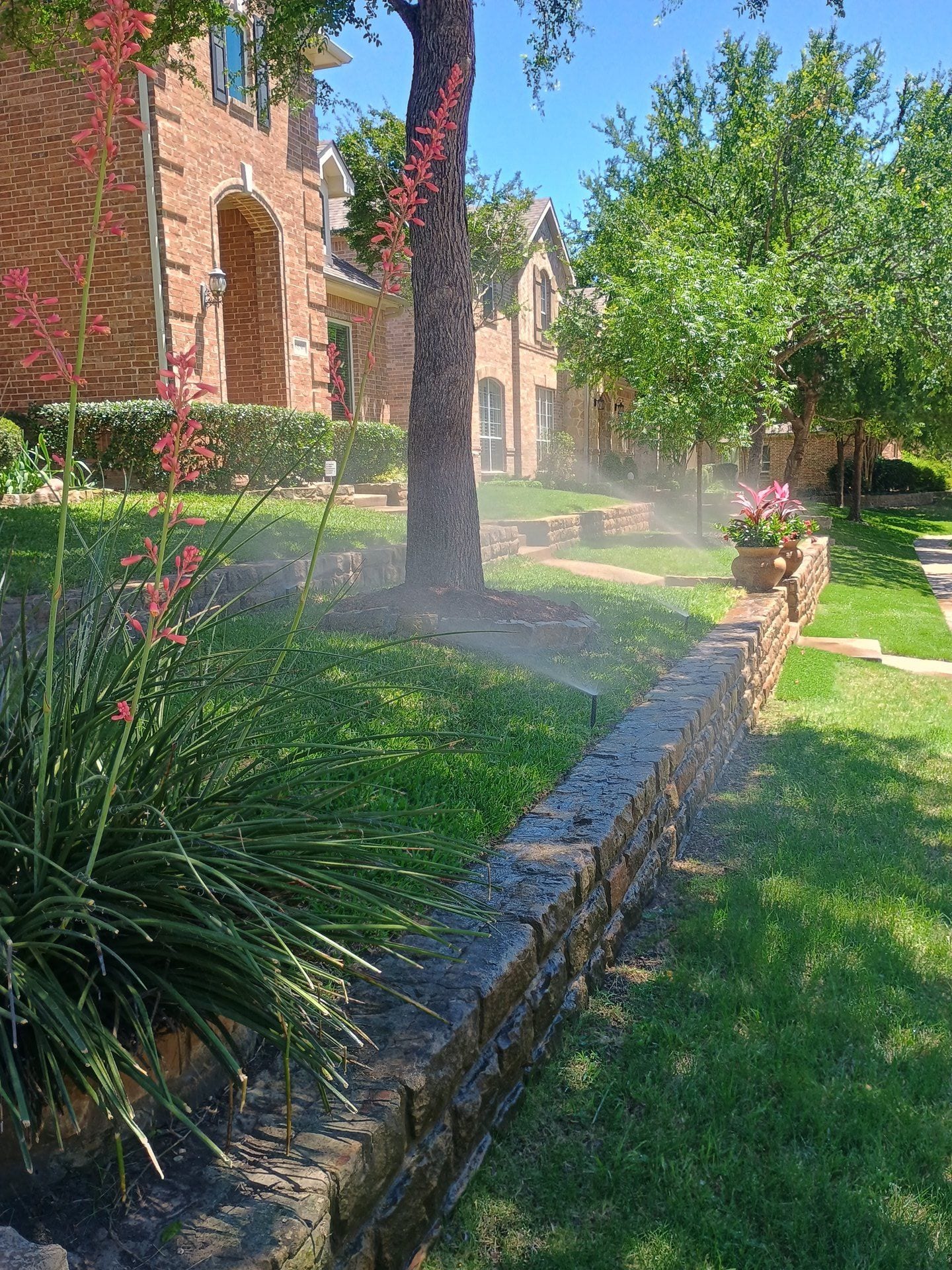
Let's address the issues we hear about most often from sprinkler repair calls across Garland, Plano, Richardson, and the wider DFW area.
Problem 1: Water Still Runs Into the Street Despite Cycle-and-Soak
You've programmed multiple start times. You're doing short cycles. But you still see runoff.
Solutions:
Shorten your cycles even more. Try 5-7 minute cycles instead of 10-15.
Increase soak time between cycles to 60-90 minutes instead of 30-45.
Check your sprinkler heads. If you're still using spray heads, the precipitation rate might just be too high for your particular clay and slope combination. Consider upgrading to rotary nozzles.
Verify your heads aren't overpressurized. High pressure creates misting and faster application rates. A pressure regulator might help.
In our experience installing systems in Richardson and Plano -- where many neighborhoods have significant slope combined with heavy clay -- we've found that some yards need 5-minute cycles with 90-minute soak intervals to fully eliminate runoff. It feels counterintuitive (such short run times!), but it works when the precipitation-to-absorption mismatch is severe.
Problem 2: Lawn Is Muddy But Looks Dry on the Surface
This is classic clay behavior. The top inch hardens into a crust, but underneath it's waterlogged.
Solutions:
Do the screwdriver test. Push a long screwdriver into your soil. If it goes in easily 6-8 inches, you have plenty of deep moisture even if the surface looks dry.
Reduce watering frequency. You're probably overwatering based on surface appearance.
Consider core aeration (covered in the next section). A hardpan crust is often a sign of compaction.
Problem 3: Dry Patches Despite Uniform Watering Schedule
You're running cycle-and-soak, your schedule is dialed in, but certain areas stay brown while others are lush.
Solutions:
Check for head coverage gaps. Walk your zones while they're running. Are the dry spots actually being reached by water?
Look for buried valve issues. Sometimes a valve isn't opening fully, reducing pressure and coverage for that zone. If you suspect buried valve problems, professional valve locating equipment can identify issues quickly. We use specialized locating tools across our DFW service area to find and diagnose buried valves without tearing up your yard.
Test for broken lines or clogged heads in the problem zones.
Verify that dry spots aren't on higher ground where water is running away from them toward low areas.
Problem 4: Standing Water or Pooling Near Foundation
Water accumulates along your house foundation, creating mud pits or even seeping toward the foundation itself.
Solutions:
Adjust sprinkler head direction away from the foundation. Most heads let you set the arc -- use a 180° pattern facing outward instead of 360° that waters the house.
Check your system's slope grading. Water should drain away from the foundation, not toward it.
If you have persistent pooling or standing water issues, you might have a drainage problem beyond just irrigation scheduling. French drains or surface drainage solutions can redirect water away from problem areas. We address the DIY approach in our French drain installation guide specific to DFW clay soil challenges.
Problem 5: High Water Bills Despite Following These Guidelines
Your irrigation is optimized, but the bills are still climbing.
Solutions:
Audit your system for leaks. A buried line leak can waste thousands of gallons without obvious surface evidence.
Check your controller's actual run times. Some systems get bumped or changed accidentally. Verify each zone is running the minutes you think it's running.
Review your precipitation rate. Use the tuna can test to make sure you're not applying way more water than you realize.
Consider flow monitoring if available. Some smart controllers or aftermarket flow meters can alert you to unusual usage patterns that indicate leaks or malfunctions.
Soil Improvement Strategies (Long-Term Fixes)
Optimizing your irrigation system gets you 80% of the way there. But if you want to make watering clay soil easier over the long term, consider these soil improvements.
Core Aeration: Once or Twice Yearly
Core aeration pulls small plugs of soil out of your lawn, creating channels for water, air, and nutrients to penetrate the compacted clay. It's especially effective on North Texas clay that gets hard as concrete by August.
When to aerate:
- Spring (March-April) before peak growing season
- Fall (October-November) when turf is actively growing and can recover quickly
What to expect:
After aeration, your lawn looks like it's covered in dirt plugs. That's normal. Those plugs break down over a few weeks, and the holes they leave create pathways for water to infiltrate more easily.
We've seen lawns in Richardson and Plano go from chronic runoff problems to smooth absorption after just two aeration sessions. It doesn't change your clay into loam, but it gives water a fighting chance to get past that surface crust.
Topdressing with Compost (Not Sand Alone)
You'll hear advice to "add sand to clay soil to improve drainage."
Don't do it. Not by itself.
Mixing sand into clay without enough organic matter creates something closer to concrete. You generally need close to a 50/50 sand-to-clay ratio to meaningfully improve texture -- and getting there means adding feet of sand, which is impractical for most yards.
Better approach: Topdress with compost after core aeration. The compost fills the aeration holes, adds organic matter that improves soil structure, and gradually builds a healthier soil profile on top of your clay base over multiple years.
Use about 1/4 to 1/2 inch of compost spread evenly after aeration. Rake or drag it into the holes. Repeat each time you aerate.
Gypsum for Breaking Up Clay (Sometimes)
Gypsum (calcium sulfate) can help break up clay particles and improve soil structure -- but only in specific situations. It works best when your clay is high in sodium (sodic soil), which causes extreme compaction.
Most North Texas clay isn't sodic. A soil test from Texas A&M or a local lab can tell you if gypsum would help. Don't just throw it down hoping for magic.
Realistic Expectations
You're not going to turn heavy black clay into loamy garden soil.
That's okay.
Clay soil actually holds nutrients better than sandy soil and can grow excellent turf when watered correctly.
The goal isn't to eliminate clay -- it's to work with it using the right irrigation techniques. Core aeration and compost help at the margins, but your watering method (cycle-and-soak, proper head selection, smart scheduling) matters more than any soil amendment.
When to Call a Professional
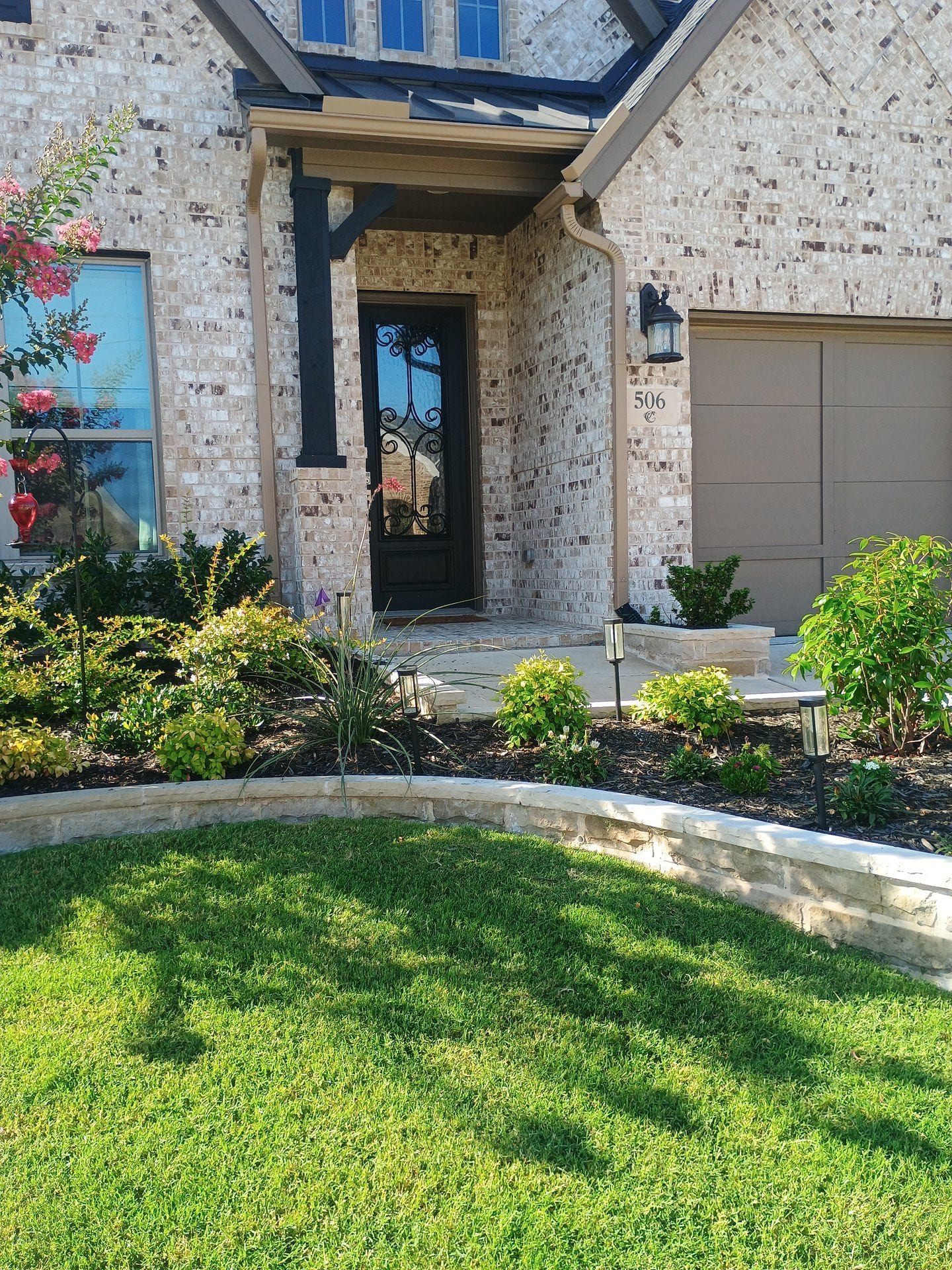
Most homeowners can implement cycle-and-soak programming and adjust their watering schedules on their own. But there are situations where professional help makes sense.
System Audit for Precipitation Rate Issues
If you've tried everything in this guide and still have runoff, you might need someone to calculate your actual precipitation rates, measure soil absorption in your specific yard, and recommend head upgrades or zone redesigns.
This requires specialized equipment (catch cup tests, soil moisture probes, pressure gauges) and experience interpreting the results. We've done hundreds of these audits across 15 cities in the DFW Metroplex, and they often reveal non-obvious issues like pressure problems or head spacing that causes uneven coverage.
Valve Locating for Buried Valve Problems
Older irrigation systems in Garland, Plano, and Rowlett often have buried valve boxes that get covered by grass, mulch, or dirt over the years. If you suspect a valve isn't working correctly but you can't find it to inspect it, professional valve locating equipment saves you from digging up your whole yard guessing.
We use specialized locating tools to pinpoint buried valves and diagnose issues without excavation. It's one of those services that feels like magic when you watch it happen -- and it's covered in detail in our valve locating guide.
Smart Controller Installation and Programming
If you're upgrading from a basic timer to a smart controller, professional installation ensures it's wired correctly, connected to Wi-Fi or local weather stations, and programmed with the right soil type, slope, sun exposure, and cycle-and-soak settings for your specific zones.
As certified Rachio Pro installers serving the Garland area and across the DFW Metroplex, we configure controllers specifically for North Texas clay soil challenges. We set up the multi-start-time schedules, calibrate precipitation rates, and integrate flow monitoring if your system supports it.
Head Upgrades from Spray to Rotor
Swapping spray heads for rotor heads isn't complicated, but it requires matching the right heads to your system's pressure and zone layout, ensuring proper coverage overlap, and sometimes adjusting piping or valve sizes. If you're not comfortable with PVC work and irrigation hydraulics, this is a project worth hiring out.
Drainage Solutions for Chronic Pooling
If you've optimized your irrigation but still have standing water, puddles that take days to drain, or water flowing toward your foundation, you've got a drainage problem that irrigation alone can't fix.
French drains, catch basins, dry wells, or surface grading might be needed. These solutions are especially common in DFW neighborhoods with clay soil and flat or bowl-shaped yards that don't drain naturally. Better Earth Solutions provides free estimates on drainage solutions across our service area, and we've helped dozens of homeowners in Garland, Richardson, and Plano resolve persistent water issues.
Frequently Asked Questions
What is the best sprinkler head type for clay soil?
Rotor heads and rotary nozzles are best for clay soil irrigation design. They apply water at 0.4-0.6 inches per hour, which is 3-5 times slower than spray heads. This slower application rate matches clay's absorption capacity (0.13 inches per hour) much better, preventing runoff while still delivering adequate water.
How often should I water my lawn on clay soil?
Water established lawns on clay soil twice weekly maximum during peak summer. Clay can hold up to 1.70 inches of water in the root zone, so it retains moisture for 3-4 days even in July heat. Watering more frequently leads to overwatering, shallow roots, and fungal disease.
What is the cycle-and-soak method?
The cycle-and-soak method divides watering into multiple short cycles with 30-60 minute soak intervals between them. For example, instead of running a zone for 40 minutes straight, you run it for four 10-minute cycles with breaks in between. This prevents runoff by giving clay soil time to absorb water between cycles.
Why does water run off my clay soil lawn?
Water runs off clay soil because most spray heads apply water 10-20 times faster than clay can absorb it. Clay absorbs only 0.13 inches per hour on flat ground, but spray heads apply 1.5-3.0 inches per hour. The excess water has nowhere to go but down your driveway and into the street.
How do I program my smart controller for clay soil?
Set your smart controller soil type to "clay" or "heavy clay," configure slope settings if your yard has any grade, specify rotor or spray head type, and set up multiple start times (45-60 minutes apart) to enable cycle-and-soak watering. Most smart controllers can automate these settings based on your zone configuration.
Can I fix clay soil with sand?
No. Adding sand to clay without sufficient organic matter creates a concrete-like mixture. You'd need close to a 50/50 sand-to-clay ratio to meaningfully improve texture -- which means adding feet of sand, impractical for most yards. Instead, use core aeration and compost topdressing to gradually improve soil structure over time.
This information is provided for educational purposes. Some irrigation repairs and system modifications may require knowledge of local plumbing codes or specialized equipment. If you're unsure about any repair or installation, contact a licensed irrigation professional in your area.
Better Earth Solutions serves the DFW Metroplex including Garland, Plano, Richardson, Rowlett, Wylie, Murphy, Allen, Dallas, Rockwall, Heath, Lucas, Lake Highlands, Casa View, Preston Hollow, and Willow Bend. For professional irrigation repair, installation, or smart controller setup, call (469) 839-2113 or book online.
Watering clay soil doesn't have to mean watching half your water bill run down the street. With the right sprinkler heads, cycle-and-soak programming, and a twice-weekly schedule, you can work with your DFW clay soil instead of fighting it.
Start with one change.
If you're using spray heads, switch to rotors. If you're running single long cycles, program cycle-and-soak. If you're watering four times a week, cut back to two.
The best irrigation system is one that matches your soil -- and now yours does.